Everything Possible – A Mama-logue

everything

This is my new monologue from the 2017 Mama-logues, a comedy cabaret about mothers, children, and parenting….

Back in 1993, when my oldest was a baby, I was a clueless and exhausted first-time mom. In the middle of the night, as my child was crying, I often sang a song called Everything Possible by Fred Small. “You can be anybody you want to be, you can love whomever you will, and know I will love you still….”

Beautiful sentiment right? But I confess one of the main reasons I sang it was it was one of the longest songs I had memorized, and I could just press play in my head and sing it through while I was half asleep…

But… it did have a message we wanted to share with our kids… a message we gave over and over… “we will love you no matter what… really…. no matter what…” I joke with my kids sometimes saying: “I mean, if you become a serial killer, we’re going to have to have some really serious talks, but I will still love you…”

That song included the line “some women love women, some men love men…”

I told my kids that it was totally OK with me if they turned out to be gay. But I also admitted that I hoped they would be straight. Because that’s an easier road to walk in our society today. And because I’m their mother, I’d really love for their lives to be as easy as possible.

Well, sure enough, over the years, they both came out to me. In their teen years, they both came out as bisexual. And you know what? It was OK. Really it was. And it was made easier by the fact that societal attitudes toward homosexuality have made such massive shifts over the past few decades. Who could have guessed back in 1993 that gay marriage would be legal nationwide in 2015!!

Their identities have evolved over the years.

My middle child now identifies as bi-romantic or lesbian but asexual. I, of course, support her and love her. (And, if I must be totally honest, it’s really kind of a relief when your college age child tells you they’re not interested in having sex…. Lifts a whole lot of worries right off your shoulders!)

Now, my oldest child… the one we knew as my daughter Amelia? Well…. Two and a half years ago, that child came to us and said…

“Mom and Dad, I need you to know… I’m a man. I am your son. And my name is Martin.”

We’d had hints this might be coming… but only for a year or so.

Most of their life, this child presented as not just a girl, but very much a girl. In grade school, distancing themselves from the boys, talking about how boys are jerks and hanging out with the girls.  In middle school, as the curves came in, embracing and showing off that curvy body. Embracing the image of “gamer girl” while playing dungeons & dragons and watching anime.

So… unlike the families of transgender kids who say “well, I guess I’ve always known”, I did NOT have that experience!

I accepted his word that this is who he is. I did. I did! But yet… I had such a hard time grasping it…. I said “but… but… you always acted like a girl… you always embraced being a girl… right??” He said “Yeah, I did. And I meant it at the time. Maybe that was defense against a truth I wasn’t ready to acknowledge.”

I accepted this new identity. I did! But yet…. I said “do you remember how I said I kind of hoped you were straight, because that’s an easier road to walk? Now you’re telling me that you’re going to be walking on a really, really hard road. We’ve made so much progress on gay rights that that doesn’t scare me that much any more. But transgender rights or even awareness?? Oh honey, that’s not there yet! Are you SURE this is the path you need to walk?? Isn’t there another way?”

Now, I know the answer to that. An old friend came out as transgender about ten years ago. She told us that she tried to deny her gender for years, and it hit the point where every single day of living as a man she had to talk herself out of committing suicide. She finally had to say to her wife: “I am a woman. I know you thought you married a man, and you didn’t choose this… but if I’m going to stay alive to parent our children, I need to do that as a woman.” Ten years later, they’re still together, and they and their children are doing well…

I am so glad that my beautiful, wonderful child does not have that level of dysphoria that my friend had. Amongst the cisgender population – folks like me who have a gender identity that matches their biological sex – the chance they’ll attempt suicide is less than 5%. Amongst transgender people it’s 41%. I am so glad my child does not feel this degree of self-hate. But he does have dysphoria… when people refer to him as “she” or “her” he does have that sense of wrongness… When people say “he” or “him”, he feels like he is being SEEN.

So, we began a new journey, me and my oldest son…

We’ve stumbled along the way.

There was a period early on where he instituted a pronoun tax… if I accidentally mis-gendered him, then I owed him a quarter. And believe me, the jar filled up fast.

Now I’m really good at his gender… but now sometimes I accidentally switch to the wrong pronoun for one of my other children! Or for the dog…

Learning the new name was tricky: you know how when you’re talking to your spouse about one of your co-workers… You start a story and say “I was talking to Laurie… you know – from work?” I was saying to my spouse “I was talking to Martin… you know – our son?”

There are some odd moments of having a transgender son on testosterone. Recently, I confronted him and said “are you the one who used up all my maxi pads?” and he said “no, Mom. No, the only reason I’ve been in your bathroom lately is to use Dad’s razor.”

The person who had the easiest time adapting was our youngest child. Ben was 3½ when Martin came out. Ben accepted the change without blinking.

A short while later, we saw a close family friend, and Ben said “I used to have two sisters, but now I have a brother and a sister.” Our friend laughed and started to correct Ben, and we’re like “Well… actually…. There’s something we need to tell you…”

A few months later, Ben learned about a character in the Mario Brothers games named Yoshi…. the green turtle-y dragon thing? Ben asked if we would call him Yoshi. We said sure, thinking it was just for that day. After that, Ben insisted on being called Yoshi. For the next 11 months. Everyone at preschool believed that to be his real name.

He has now returned to being Ben… turns out that it was “just a phase.” But Martin… is still my son Martin. It’s not a phase, it’s who he is.

Like all mothers, I want my child to be healthy, and happy, and whole. So, when he introduced himself as my son, Martin Emilio… and later introduced me to his boyfriend Xander, what else could I say other than “you can be anybody you want to be, you can love whomever you will… and know I will love you still.”

———————————–

Resources:

PFLAG’s Guide to Being a Trans Ally: covers all the basics, including defining terminology like cisgender, transgender, gender expression vs. gender identity vs. sexual orientation.

GLAAD’s Tips for Allies of Transgender People: actions you can take to “help change the culture, making society a better, safer place for transgender people…”

The National Center for Transgender Equality’s Supporting the Transgender People in Your Life. Tips on interacting with transgender people, being an outspoken ally, changing businesses and schools, and changing the world.

How Do You Do It? … On being a one legged mama

Each year in Seattle, there’s a show called “Mama-logues,” a comedy cabaret about motherhood, for people who are mothers, have mothers, or know mothers. This is a piece I performed in 2013 and again in 2017, on being a mom with a “disability.”

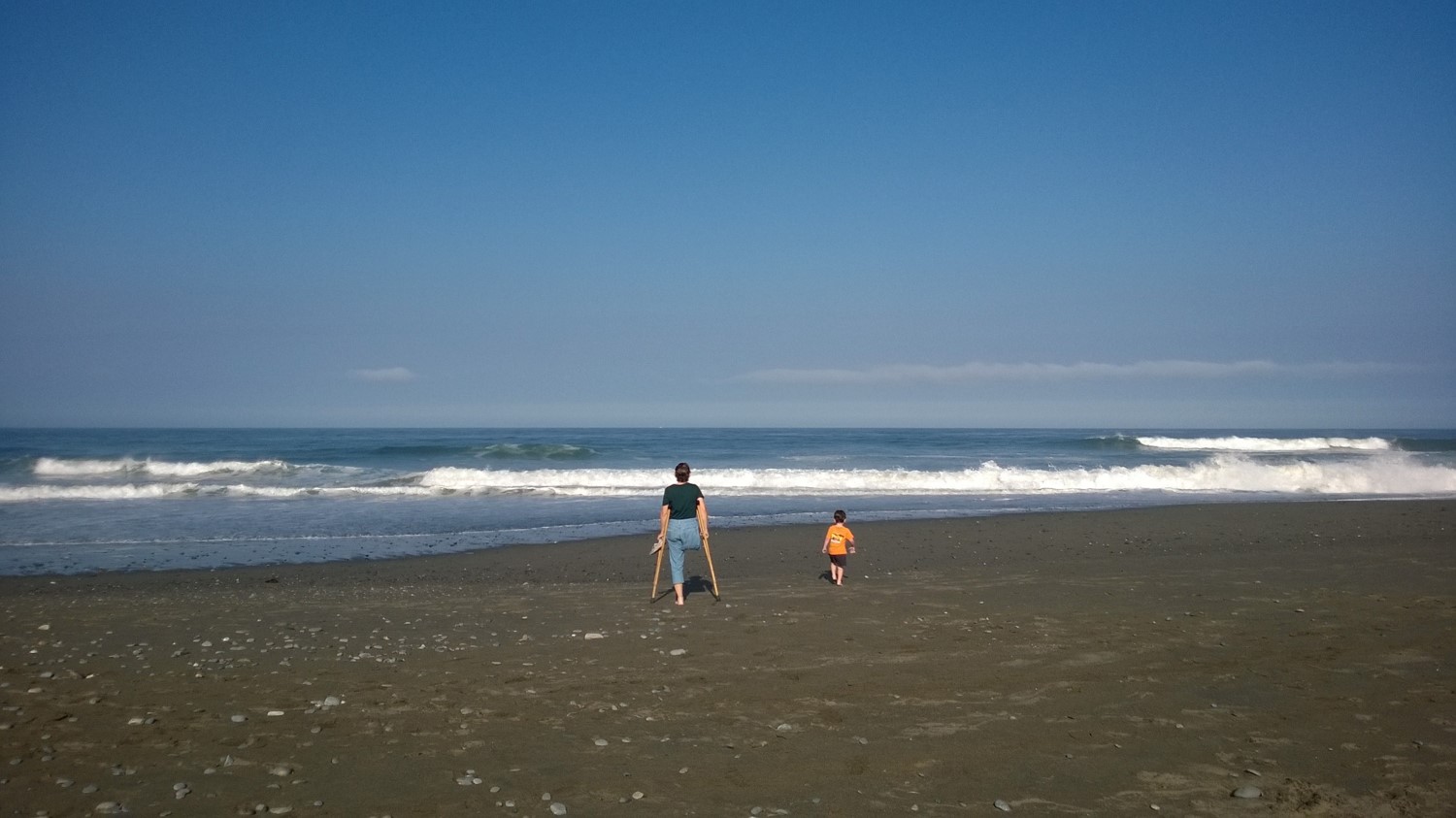
I know about a developmental milestone that you won’t find in any book. At exactly three and a half year old, all children notice that I only have one leg. Really. Universally, if a child points me out in Starbucks (“mommy, look, that lady only has one leg”) they are guaranteed to be three and a half.

Past the age of four and a half or so, they’ve learned not to say anything out loud. But you all have a 3 year old in your brain, that couldn’t help but comment when I came out on stage…. “hey, that lady only has one leg.”

When some people see me, especially on the stage at Mama-logues, they may wonder… does she actually have kids?

Why yes, I’ve got three of them – a 23 year old, a 20 year old and a 6 year old.

People ask me “How do you do it? What is it like to take care of a baby when you only have one leg?” I’m like “I don’t know…. What is it like to take care of a baby if you have two legs?”

But really, having one leg has rarely seemed like an issue to me.

I had two legs for the first fifteen years of my life, then I had bone cancer and an amputation, and now I’ve been an amputee for over 35 years… This is my body, and this is just how I go through life.

And as for parenting and caring for my kids, I figure things out as I go along, just like you all figure out parenting as you go along.

It started 23 years ago, I was pregnant with my first.

Sure, there was a little trepidation going in… what would pregnancy be like? How would I carry a baby? A toddler?

It actually turned out that the whole pregnancy thing was easy for me. I remember going to my childbirth classes, and getting down on the floor for relaxation exercises and breathing practice [hoo-ha, hoo-ha]. When we finished, I’d stand back up – no big deal. Then I’d look around and see all these other two-legged mamas struggling to their feet, needing their partner’s assistance to get up off the ground. Oops… should I make it look harder for me next time?

When I’m carrying my babies and toddlers, sometimes well-meaning strangers approach me to see if I need help. I appreciate their gesture, and I hope they also make those offers to parents who do need help.

But, I have to also laugh sometimes. Like when I am getting my toddler out of the car at the community center, and this lovely older couple offers to carry him inside for me… I say thanks, but I’m good… the couple says “Oh, can you carry him by yourself??” I’m thinking – “y’know, if I couldn’t carry him inside by myself, why would I have brought him here by myself??”

I’m tempted to tell them: “you know, not only can I carry a baby by myself, I can walk upstairs while carrying one. And not only that, I’ve walked upstairs on my crutches while holding and breastfeeding a baby… how many people on the planet do you think can do that?”

Do I do some things differently than I would if I had two legs? Almost certainly. But I don’t feel like there are many things I CAN’T do – I just have to adapt and be creative sometimes.

Once when our older kids were little, we took them ice skating at Christmas time. The plan was for Peter to help the 3 year old skate – but it turned out the 7 year old needed help too. So, I was helping Izzi. Can I walk around an ice rink on crutches while holding up an ice skating pre-schooler? Sure, you bet.

But then, the staff at the rink came up and told me no one was allowed on the ice without ice skates. I pointed out our situation, but they insisted. I said “Seriously?? You really think it would be safer for everyone if I were to put on an ice skate??” They said that was the policy and they couldn’t let me on the ice with Izzi unless I had skates. The 7 year old was worried, my 3 year old was sad. So, I just said to my kids: “No problem, I can do this.” And I went and put on one ice skate, made my crutches three inches taller, and back we went to the ice rink.

And it was fine. A few years later my kids wanted the family to go roller blading. We tried it. The kids and my husband both fell LOTS of times when they were learning… Me? Piece of cake. It’s actually easier to roller-blade on crutches.

Do my kids need to adapt to the fact that I have one leg? Nope, it’s all they’ve ever known. By the time my son was 11 months old if he wanted me to go somewhere with him, he’d go get my crutches and drag them over to me.

There are some things we do differently… My kids know we don’t play the chase game – the run away from mommy in the parking lot game – Because I couldn’t catch them if they ran from me. They know when I say stop, they stop, or we go home. Period.

My son’s kindergarten math problems are more complicated to figure out in our household than they might  be in yours…. “If four people want to go ice skating, how many skates will they need?”

My kids are experts at answering all the questions that kids in the playground ask about “how come your mom only has one leg? Did she break it… right off??”

Are there perks to this life with a one-legged mom? Yep – has your child ever dropped his Thomas the Tank Engine in a parking lot, and had it roll away so it’s way way out of reach under a monster SUV? Ever had to figure out how to get it out before the toddler melts down? You know, it’s really easy if you carry a four foot long pole with you everywhere you go!

Works for knocking frisbees down out of trees too. Or pushing a kid on a trike.

Plus I bet your kids would rather go to Disneyland with me than you! At the airport, we get skipped right past those long lines at security…. We board the plane early… we get to park our car really close to the park entrance, and yep, we get to skip all the lines… wanna do Space Mountain again, kids?

People ask me all the time “how do you do it?”

I do it because I have to for my kids.

I know that out in the audience, there’s a parent of twins, or a parent of two kids under two, or a parent of a child with autism or ADHD, or folks who face plenty of other challenges. And people say to you all the time “I just don’t know how you do it.” Right?

Here’s the thing: we do it because we’re parents. We do it because our kids need us to do it. And every day we figure out how to do something new, because our kids need something new. It’s just what parents do, whether they’ve one leg or two.

Identity: Living Life on One Leg

This is the text for a sermon I gave on March 12, 2017 at Northlake Unitarian Universalist Church in Kirkland, WA.

Identity

Our worship theme for March is identity. Many things shape our identity. Some of those influences are beyond our control – such as our race, our sex, the circumstances of our birth.  But other parts of our identity are in our control… they’re based on the choices we make and the actions we take. Thus, we are shaped both by the circumstances which thrust themselves into our lives, and by how we choose to respond to those circumstances.

Identity is multi-layered. We have

  • our internal identities – how we perceive ourselves.
  • our broadcast identities – what we intentionally present to others – which may vary depending on who we are presenting to
  • our external identities – how others perceive us, which is colored by their own life experiences and learned biases.

When human beings meet someone for the first time, we very quickly make assumptions about their identity. One study showed participants a photograph and asked for participants to describe that person. Let’s all try it… take a really quick look at a picture…

Now ask yourself – do you believe that person is trustworthy? Or not? Likeable? Or not? In the study, viewers formed remarkably consistent impressions after seeing an image for only 1/10th of a second.

Another study revealed that even if people were later given additional information that contradicted their first impression, it was difficult for them to over-ride their initial thoughts.

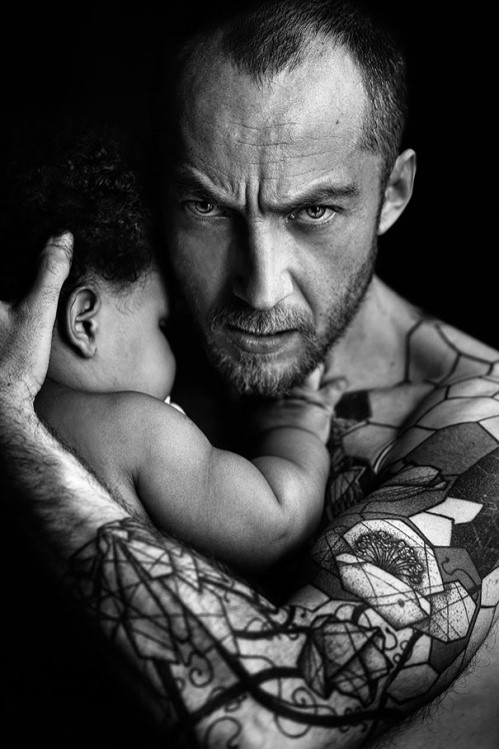
modelmayhem.com/scardicchio

First impressions are snap judgments. When you meet someone for the first time, you do a quick tally of all the ways that person is either like you or not like you, is like the people you know and trust or is different from the people you know and trust. You take into account their race, gender presentation, clothing, hairstyle, weight, voice, accent and more. You create a story in your head, making a variety of unconscious assumptions based on what you see and hear, interpreted through your own lens.

When someone sees me for the first time, what most people notice is not my race, my gender, the fact that I wear glasses, the color of my shirt… the first thing they notice, even from a distance, is that I only have one leg.

And they begin constructing stories about me based on that singular fact. And yes, it’s an important fact, and the story has certainly helped to shape my identity. But my disability does not define me. There are many other things that form my full identity and that make me all that I am.

Today, I’m going to follow the approach of Ira Glass on This American Life, and I’m going to tell you a story in three acts. Act one: So, what happened to my leg? Act two: What is my identity? Act three: how does this relate to the broader questions of identity and privilege?

Act One – Why I have one leg

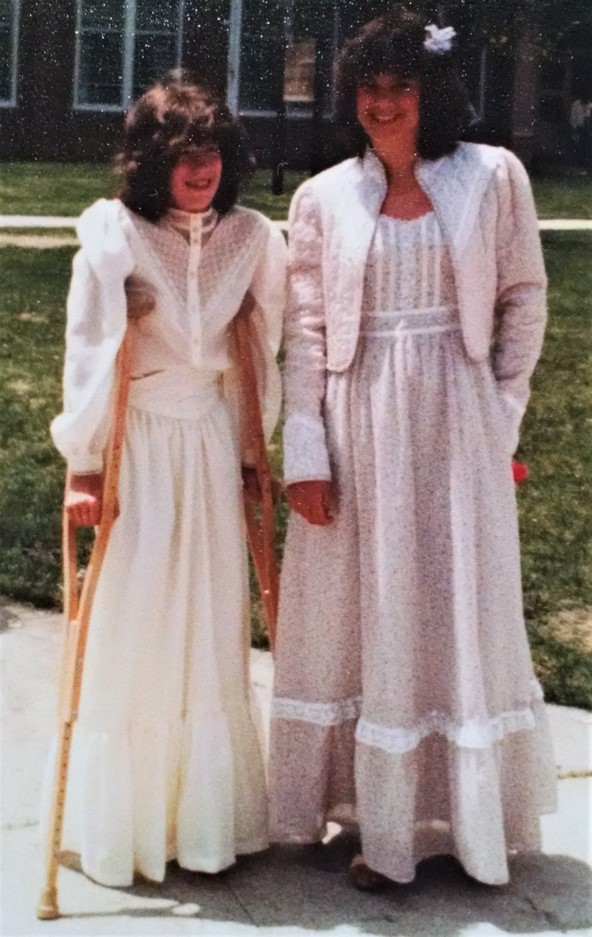
Let’s jump back to my ninth grade year. I was 15 years old. I’d had an easy uneventful childhood and early adolescence. I’d lived in the same house my whole life, and had a calm family life, with dinner on the table every night at 5:30 pm. My older siblings and my parents were always around if I needed them, but I’d been raised to be very independent. I was pretty athletic. I was happy socially, with plenty of friends. I was one of the top students in school. Overall, a pretty together, yet pretty typical kid.

Then… on New Year’s Eve, I found a lump on my right leg, just above the knee. I started freaking out, convinced it was cancer. In a panic, I went to my brother. He took a quick look, and declared with all the confidence of a 17 year old sage, “Eh, it’s just a swollen muscle. Wrap it with an Ace bandage and it’ll get better.”

So, that’s exactly what I did, for the next month.

Didn’t mention anything to my parents or anyone else, because it was just a swelled muscle… no biggie.

On a Sunday at the end of January, I went ice skating with my church youth group. By Monday night, I couldn’t walk without limping. When I showed my mom the lump, she scheduled a doctor appointment for Tuesday morning. I went to my doctor, who took one look, sent me for x-rays and sent me to meet with an orthopedist that afternoon. That doctor took one look at the x-ray, and told us he was sending us to Denver Children’s Hospital that night. The next two days were a whirlwind of tests, and a biopsy, and a diagnosis. Osteogenic sarcoma. Bone cancer. The lump I could see that was the size of my fist was half of a tumor which went more than halfway through my femur.

So, by the end of the week, there were decisions to be made. The best option was one month of chemo, then an amputation, then 8 more months of chemo. With that aggressive treatment, they estimated that my five year survival odds – the chance that I would reach 20 years old – was about 20%.

You would think that would have been terribly frightening. And it may have been for my family and friends. Though if it was, they hid that fear from me.

But, I didn’t hear the odds as an 80% chance I wouldn’t survive. I heard that I just had to be in the top 20% of people in this situation. And remember, I was kind of a cocky kid, confident in my own abilities. I’d never gotten less than a 90% on a test in my life… I was always in the top 10% of everything. So this was a piece of cake. If I just went through the required steps, it would all turn out fine. I never doubted that. (Gotta love an adolescent’s belief in her own immortality, eh?)

Thus began nine difficult months of chemotherapy, amputation, more chemo, physical therapy, more chemo, getting an artificial leg, more chemo… I was sick as a dog. I’d get my treatment, then spend 3 or 4 days vomiting… then I’d have ten days to recover, then start again. I was the same height I am now – 5’4” – and after a few months, I weighed 55 pounds. But I was back at school by partway through March, and finished 9th grade with my class. With an A- average.

I’d lost all my hair, and that was a big deal to me. I NEVER let anyone see me without my wig – even on my sick days at home. The idea of being bald was much more upsetting to me than having one leg. This ended up being a great coping mechanism in the long run – my hair would grow back and my leg never would…

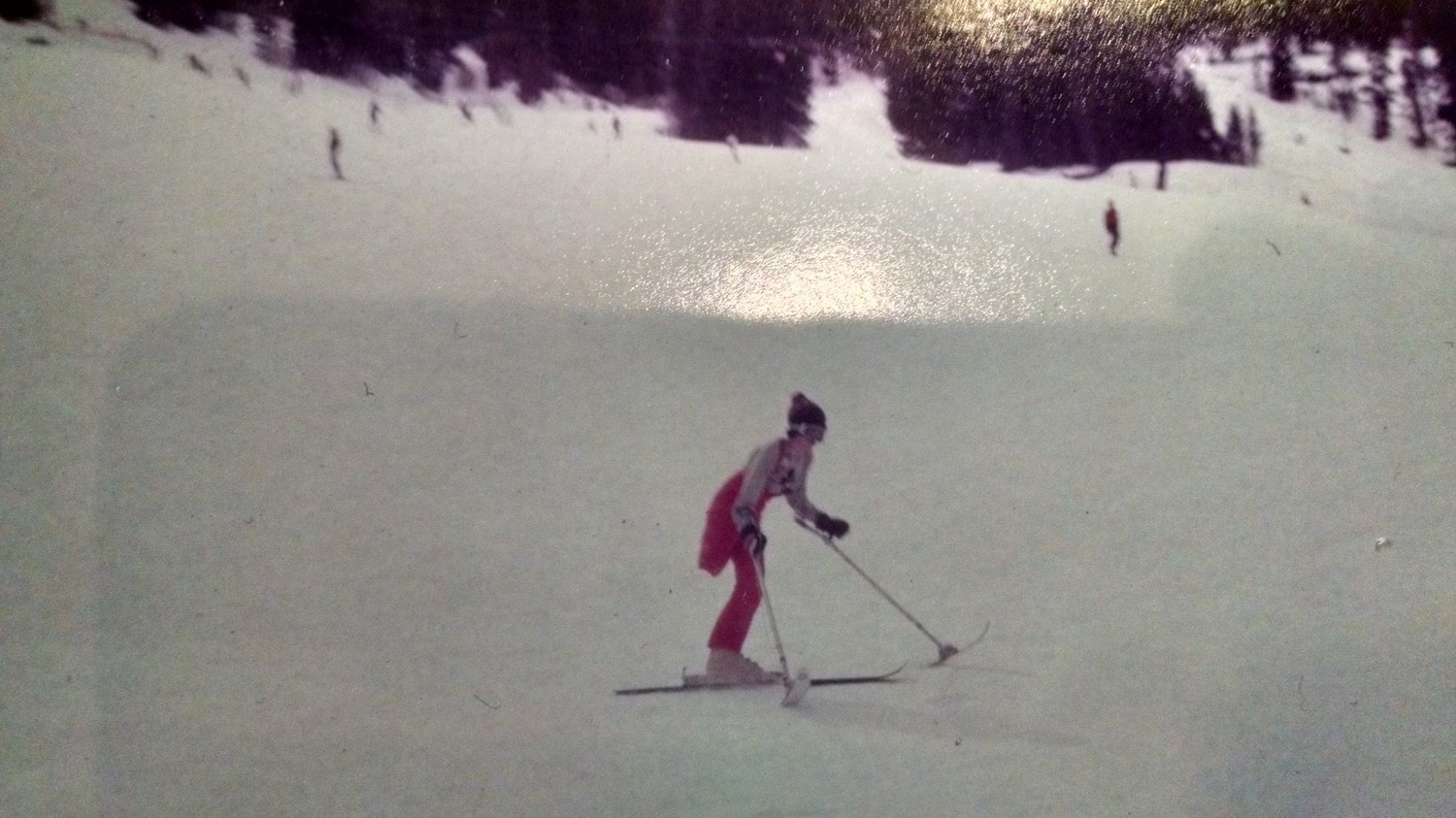
A year after this process started, I was back in school full time, back to a reasonable weight, my hair was growing in, I’d gotten pretty good on my artificial leg, and I was learning to ski.

Five years later, not only had I hit that 5 year survival mark healthy and cancer free, I was in college in Boston and doing fine. I’d started as pre-med but moved into sociology. I’d decided I was more interested in supporting people through the social and emotional challenges of illness than through their medical care. I wasn’t skiing much, because the mountains of New England are disappointing when you’re used to the Colorado Rockies. But I’d started a new hobby of renaissance dance.

Ten years later, I was living in Redmond, married, working as a social worker at Children’s Hospital with kids with cancer and I was pregnant with my first child….

Now, it’s 35 years later. Today, March 12, happens to be the 35th anniversary of my amputation. Not only have I been cancer free all that time, I’m generally in overall better health than most of my peers.

So, that year I spent on chemo was, to be honest, a really crappy year. And, yes, my treatment resulted in me losing my leg. But, in retrospect, it’s not so bad when it buys you 35+ years of good health. It also bought me a whole lot of perspective. Having that close brush with death ingrained in me a few attitudes like “life’s too short to hate your job” and “anger and hate only waste precious life energy.”

When I was diagnosed with cancer, I was a 15 year old on the cusp of defining my identity and figuring out who I would be as an independent adult. So, losing my leg at that developmental point obviously had a big impact on shaping my identity. And yet… the fact that I’m a cancer survivor and an amputee is old news for me. There’s so many other things that matter to me at least as much. So, let’s move on to:

Act Two – What is my identity?

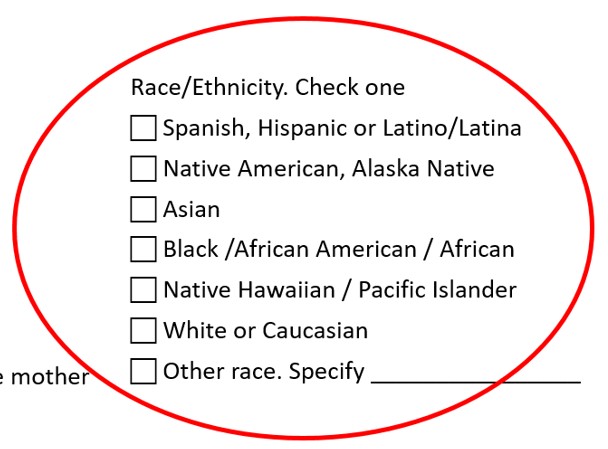
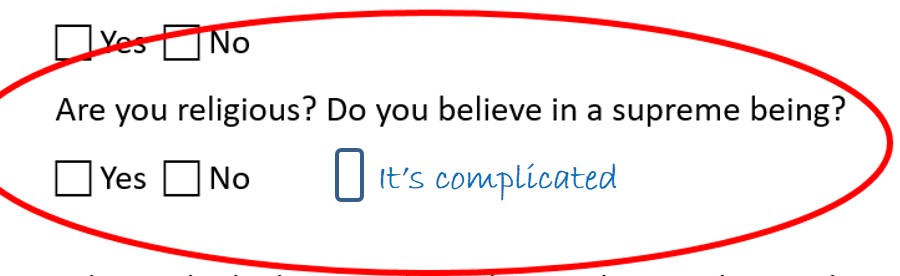
When we look at the question of identity, many times we’re asked to simplify things down to one label, like checking boxes on a form. The problem is those labels are defined through the lens of our dominant culture which makes a whole lot of assumptions in what options they offer. Choosing which box to mark isn’t always as straightforward as it seems.

The question “What is your gender” is almost always followed by two boxes.

The answer is not that simple, as my transgender son can tell you.

Race is not simple… a Chinese American man shared on an NPR story how picking just one box meant choosing one race over another – denying part of his ancestry. And choosing “other” wasn’t very satisfying.

And how about religion? There’s several of you I see here at church every Sunday… but I’m guessing many of you are stymied when asked whether you believe in a supreme being. I imagine most Unitarians want to write in “it’s complicated.”

So, when I see a form asking if I’m disabled, I have an internal debate about my answer. First, it’s the word… Although most advocates recommend using the word disability, I personally don’t like the word disabled, because it implies that I am not able to do things.  I can do almost everything… I can ski, or ice skate, or roller blade… I can carry a kid. I can move furniture. So… I can’t run. And I can’t do ballroom dance or tap dance with complicated footwork like “step-ball-change”. But I don’t feel “disabled.”

I generally describe myself by saying “I have one leg” or “I use crutches.” If I had to choose a label, I like handicapped – because in sports, you give a “handicap” to the really talented person so other folks have a chance of keeping up.

But, beyond language choice, when deciding whether to mark a box, I end up asking “why are they asking the question?” (My husband and my kids are “Hispanic” and they ask themselves these same questions…)

  • If it’s a demographic survey to assess needs (like “do we need to offer services for the disabled?”) then I always add my check mark to the tally to increase the chance that people who need services will receive them.
  • If it’s something asking specifically if I need services, like a tour asking whether I would “need special accommodations”, I say no, because I don’t.
  • If I think saying yes will benefit me at the detriment of someone else, I say no. For example, I was offered a scholarship for grad school that was earmarked for a person with a disability. I asked them to offer it to someone else. I could afford the tuition, and many could not.

So on paper or online, I can make choices about whether to reveal my disability. In person, in how I present myself to the world, I also make choices.

I could wear an artificial leg. I did most of the time back in high school and college. It made people more comfortable. Even if they knew it was an artificial leg, it was somehow easier for them to pretend that I was “normal.” But my artificial leg was uncomfortable to wear. It slowed me down. So, I stopped wearing it. It is more important to me to be able to move easily than it is to worry about how I look to others.

Yes, modern artificial legs are better. Maybe someday I’ll wear one. But for now, I don’t want one. It’s partially about mobility and convenience. But it’s also about identity. Wearing a prosthesis feels like trying to hide who I am.

Having one leg makes it hard for me to be invisible. People remember me. I often have strangers say things like “Hey, your kid just started school at my daughter’s school.” There were 100 other new kindergarteners this year, but I’m guessing other parents are less likely to be recognized at PCC, just two days into the school year.

Because my handicap is so visible, whenever I move through the world, I am representing “disabled people.” Many minorities experience this when interacting with a majority culture… the one woman in a tech company… the one person of color in an otherwise all-white workplace.

I am often asked to answer questions, or speak, or write on how to better serve people with disabilities. And I do, but I’m always very careful to say that I can only speak to my own experience, and other people with disabilities could have very different perspectives, based on their disability, how long they’ve had to adjust to it, their emotional reaction to that disability, and other parts of their identity – race, orientation, and so on.

My nature is to be extremely independent, and not ask anyone for help. Remember, I was raised in Wyoming, by a military family – we’re tough stock.

So I have to figure out when to ask for help, and also when to accept help.

Whenever anyone offers to open a door for me or gives me a seat on the bus, I say yes and thank you. I don’t need this, but I want them to have a positive experience, because the next time they see a person with a disability, I want them to offer their assistance. When I was pregnant and one-legged, on the rare occasion someone didn’t offer me a seat, I would give just a little look of surprise. Just enough to imply… “huh, I’m surprised you didn’t offer your seat. Good people look out for others, and it seemed like you were a good person…” They would then often look a little startled, realize that I was right, and give me their seat. In this case, I was using a little of my privilege as a white disabled woman to remind them that when any person comes on a bus that needs the seat more than they do, they should stand up.

When I pull my car into a parking lot, I decide whether to use the handicap spaces. Years ago, I avoided them, because I don’t need them. I can walk for miles. But disability rights advocates encouraged me to rethink that. If every time people pull into a parking lot they see lots of empty handicapped spaces, they are tempted to use them. If instead, they see me getting out of my car on one leg and crutches, they think “wow, it’s a good thing no one took that space.” So, I never take the last handicap space, because I am certain someone will come along who needs it more than me. But if there are several spaces, I always take one.

So, even after 35 years as an amputee, I’m still sorting through identity questions about whether I view myself as disabled.

But really, most of the time, when I think about my identity, I don’t focus on just one label because so many others apply. There are so many things that make me me.

In the video we watched at the start of the service (see below), all the participants were put into a box based on one identity. All they could see was what made them different from other boxes. But then, as the host listed other identities, people began stepping forward, and seeing all the things they have in common.

What makes me different from you is that I only have one leg – that’s the first box people put me into. But there are many other things that define me.

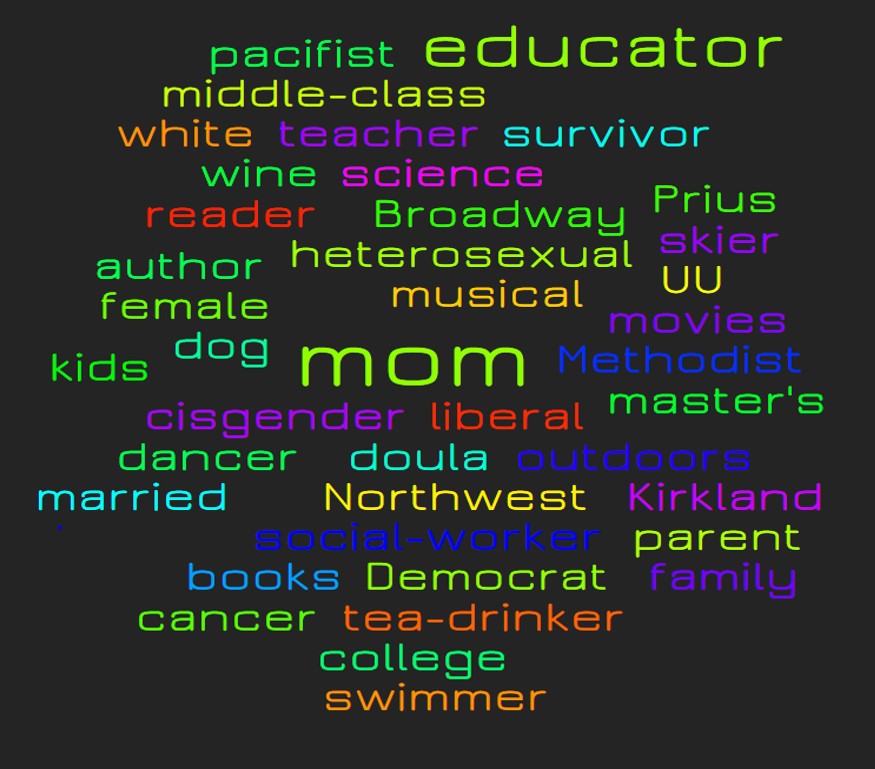
I may have some of these in common with many of you – think about when you would step out of your box and join me…. I am a cancer survivor. I am a heterosexual, cisgender woman. I’m married and have been married to one man for more than half my life. I am a pacifist and a bleeding heart far left liberal. I’m a skier, a swimmer, and a dancer, and I love long walks. I am a movie buff, a musical theatre fan who sings Broadway show tunes in the shower and an avid reader. I grew up Methodist, and now I’m UU. I am a social worker, a doula, a health educator, a parent educator, a kids’ science teacher, and an author. I live in Kirkland, and am a Pacific Northwest person. I start every day with a cup of tea and enjoy a glass of wine with dinner. And probably the most important identity to me is that I am a mom. Parenting my three kids is the most important thing I do and the one that I try the hardest to get right.

And that identity has led me to my current career. I work as a parent educator for Bellevue College. I teach parents about everything related to parenting, from potty training to early literacy to emotional development.

Why do I think it is so important to get parenting right in those early years?

Last week, in his sermon, Mike Lisagor shared a snippet from his childhood: “We moved several times. My dad was always losing his job or losing his temper. My oldest sister was always running away from home.” Mike talked about how fear and despair shaped much of his early life, and how hard a path it was for him to find his way back to hope.

I had the opposite experience. I had a childhood that taught me that the world was a safe place filled with good people. I grew up trusting that things would always turn out OK in the end. So cancer at 15 didn’t scare me, because I had the privilege of a happy childhood.

The author of the book, Secrets of Happy Families, Mike Feiler says “When faced with a challenge, happy families, like happy people, just add a new chapter to their life story that shows them overcoming the hardship.” That was certainly my experience. My goal with the families I work with is to help them build that same resilience. I want children to hear messages like we heard in our Time for All Ages story, when Molly Lou Melon heard from her grandma: “Believe in yourself and the world will believe in you too.”

Feiler also recommends that we tell our children about our challenges and how we’ve overcome them. He says “if you want a happier family, create, refine and retell the story of your family’s … ability to bounce back from the difficult ones. That act alone may increase the odds that your family will thrive for many generations to come.”

It’s time for…

Act Three – How does my experience relate to the broader questions of identity, privilege and intersectionality?

As I said at the beginning, many things shape our identity. Some are based on the choices we make and the actions we take. But some influences are beyond our control. Yes, for me that included a childhood cancer, but for all of us, that includes our race, our biological sex, etc…. And that’s why we need to talk about privilege and intersectionality. Let’s quickly define terms:

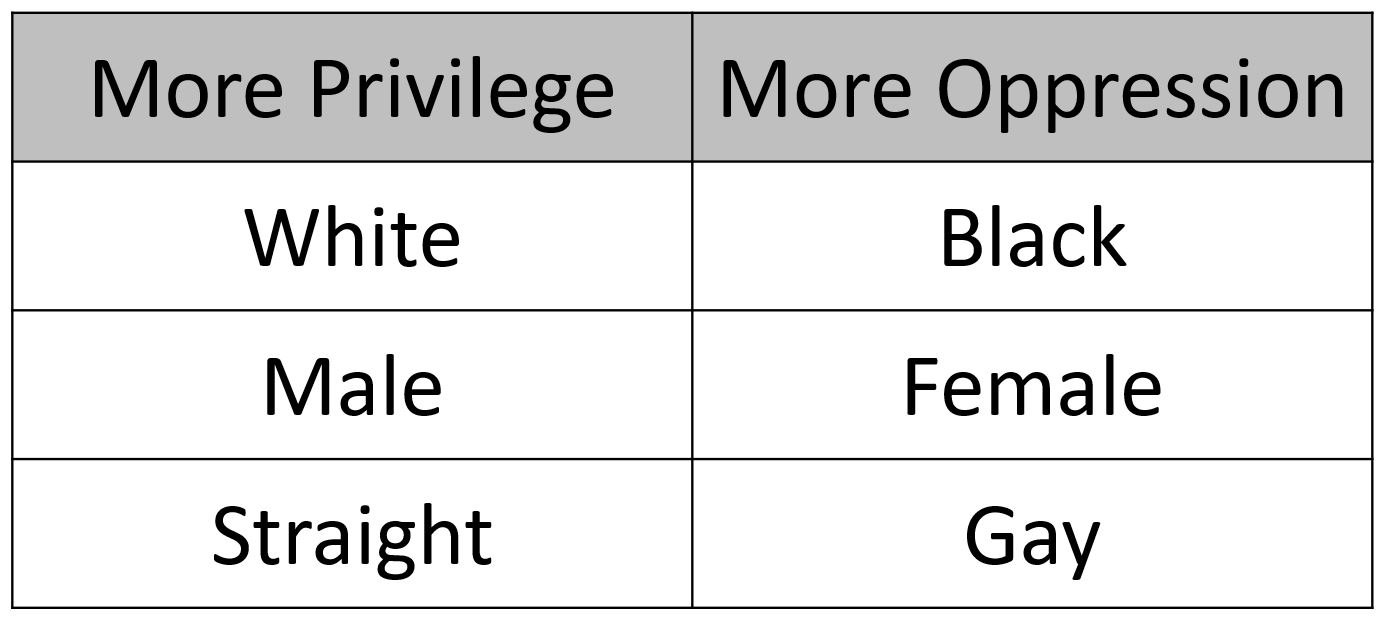
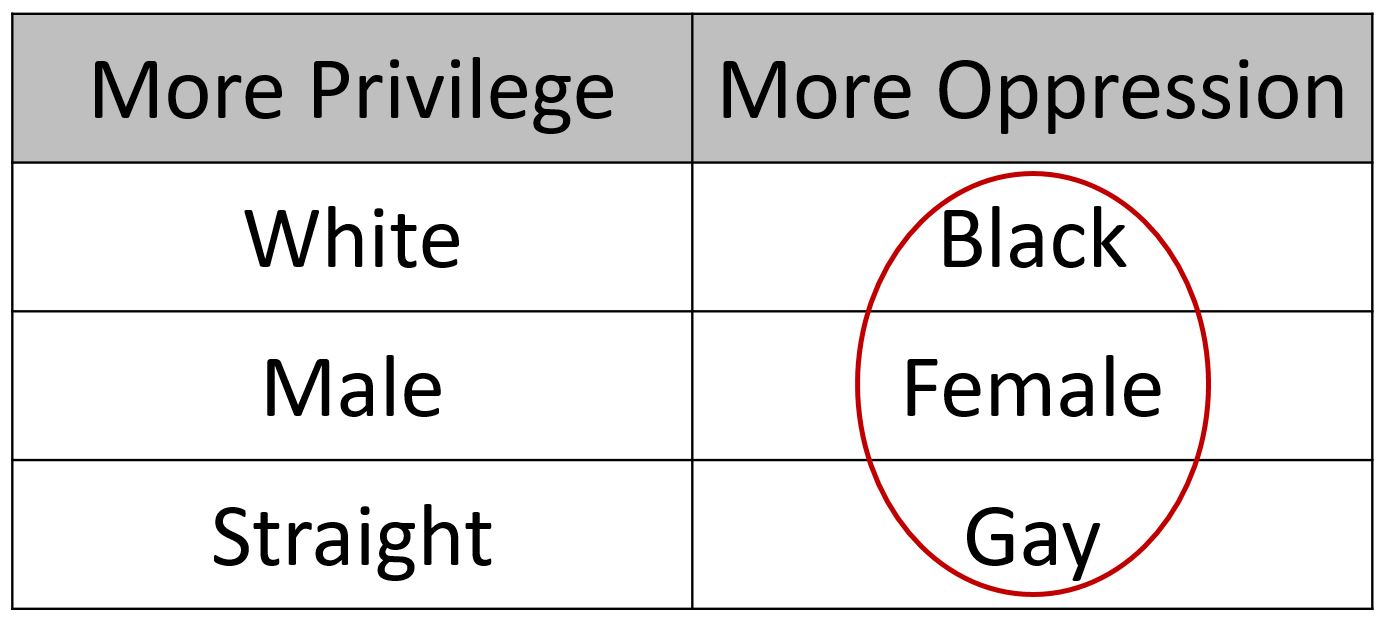
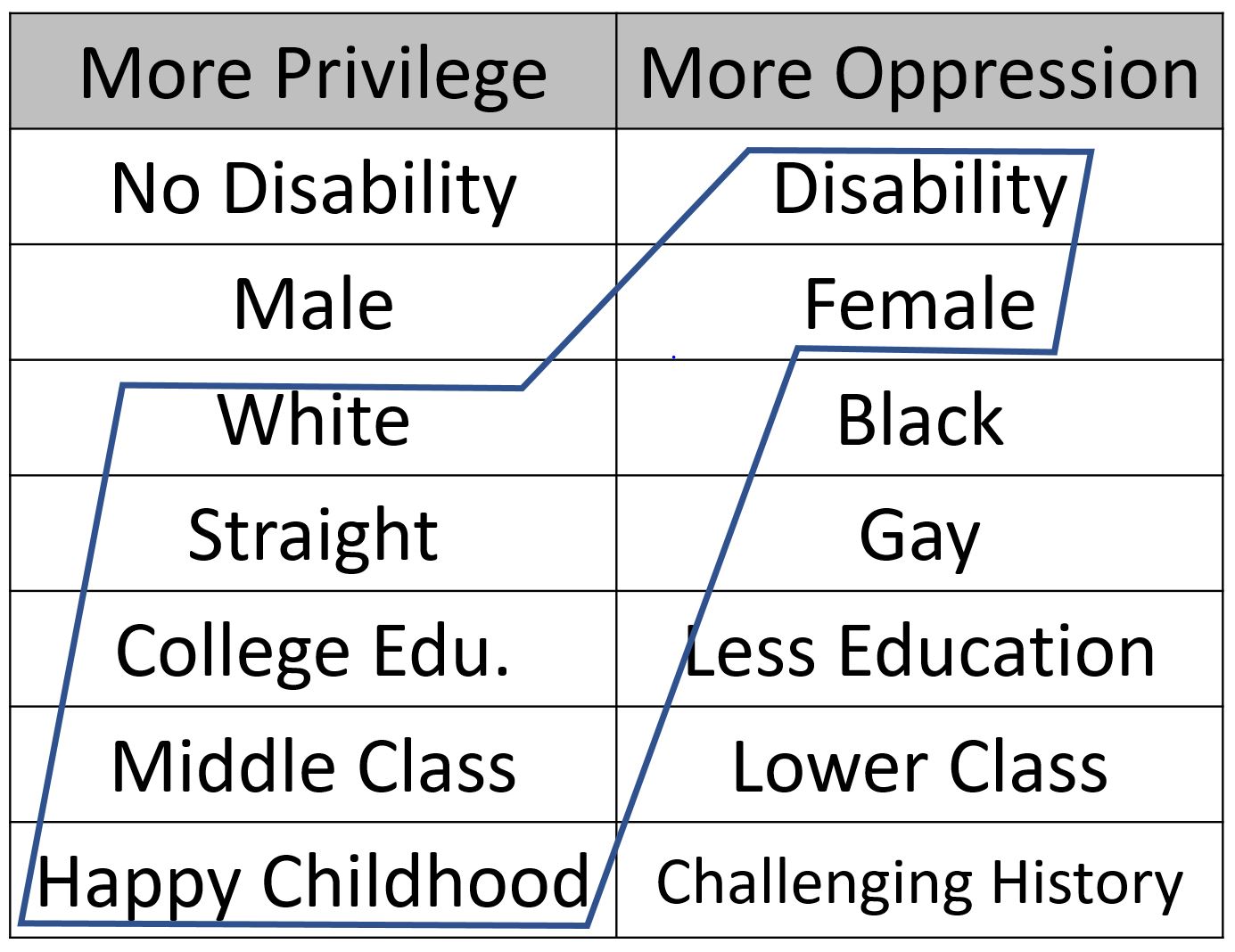
So, what is privilege? If we acknowledge, as we must, that on average, African Americans as a group experience more discrimination or oppression than Caucasian Americans, that also says that white people have privilege compared to black people. Privilege is the opposite of oppression. So, let’s look at a few categories: This is how most people would fill in this chart of what groups in America are more likely to experience privilege.

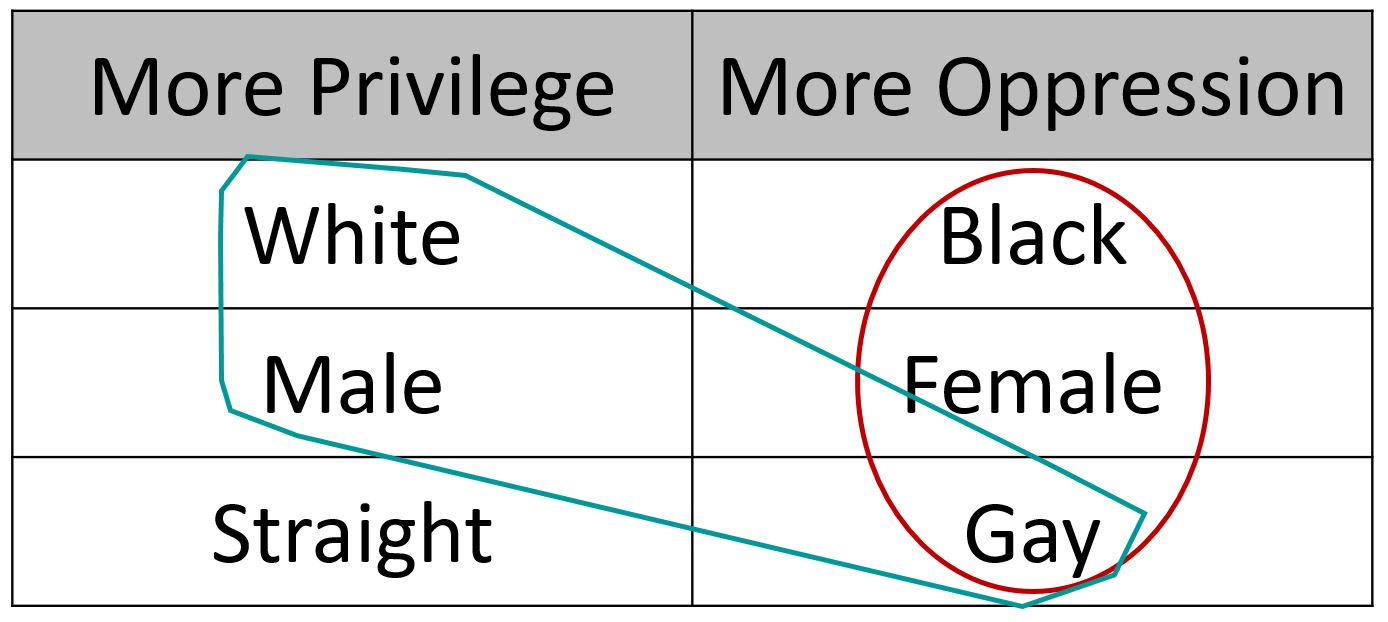
What is intersectionality? We all have multiple identities, and are all members of more than one community at the same time. When we add these all together, they compound. For example, a black lesbian experiences racism and sexism and homophobia.

She has fewer opportunities and faces more challenges than a white lesbian or a straight black man or a gay white man.


I can honestly say that my disability has not been a big obstacle for me. But I have to acknowledge that much of that is due to privilege…. When most of the other cards in the deck are stacked in my favor, it’s easier to ignore the disability card.

For example, 40% of people with disabilities report experiencing discrimination in the workplace. My disability has never limited my ability to get, do, or keep a job. It helps that I’m well educated – I have the privilege of an educated family that helped me do well in school so I went to college on a full ride scholarship, and then I went on to grad school because my husband’s income could support our family. But part of my job success is also because I am white, straight and cisgender. And I’ve chosen female dominated fields, so my gender has never been an issue.

I have been, overall, blessed to live an easy life. I mean, sure, I had cancer when I was 15 and lost my leg… but on balance, my life is pretty darn good… And I do consciously think about the ways I can use my privilege to speak out and support those who do not have the same privileges, and to raise awareness of these issues.

So, I have shared today my story of living life on one leg. But another amputee’s story – their identity – might be very different.

For all of us, our identities – the unique lights we let shine – are products of all our history, our group identities, accidental encounters, beliefs, choices and actions. We reach our fullest potential when we can embrace all the parts of our identities, and not limit ourselves to someone else’s story about who we are. Our closing words are from Spirit Daily:

People label us. They put a tag on us. And too often, it sticks. We start to believe the way we’re perceived …[which is] based on assumptions, false first impressions or old information…. Joy comes with greatness – the greatness of motherhood, the greatness of being a great janitor, the greatness of a life lived for others. It is labels – and our accepting those labels – that prevent us from achieving bigger spiritual things. Go for the greatest “you.” Go for the best you can be – no matter what others around you think.

When we sing about “this little light of mine”, remember that all light is made up of many colors of light shining together. So let your own unique light shine… sharing all the contradictions that make you you. Let it shine, let it shine, let it shine.

Sermon on the Power of Story

Today, I did my first sermon, as a guest speaker at Northlake Unitarian Universalist Church in Kirkland. The month’s theme was Stories, and my sermon was entitled “Stories Inspire, Educate, and Change Hearts and Minds.”

Here are the readings, and the sermon:

Centering Words

This is a Yiddish teaching story, told since the 11th century in various forms

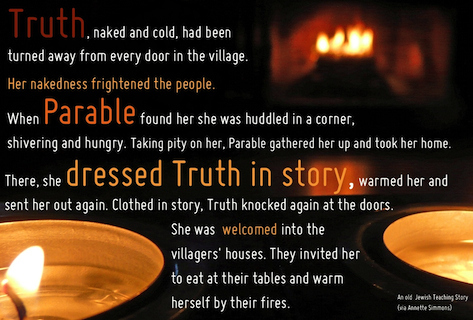
“TRUTH, naked and alone, walked into a village. The local inhabitants immediately started cursing at her and chased her away. TRUTH walked along the road to the next town, and they spit at her and spewed epithets until they drove her out of town. She continued walking down the road, hoping to find someone who was happy to see her, someone who would embrace TRUTH with open arms.

So she walked into the third town in the middle of the night, hoping that the townsfolk would be happy to see TRUTH in dawn’s light. But as soon as the townsfolk saw her, they started throwing garbage at her. TRUTH ran off, into the woods, crying.

Later, she heard laughter, singing and applause. From the woods, she could see the people welcoming a creature named STORY as she entered town. They brought out fresh meats and soups and pies and pastries and offered them all to STORY, who reveled in their love and appreciation.

Come twilight, STORY found TRUTH huddled in a corner, shivering and hungry. Taking pity on her, STORY gathered her up and took her home, saying ‘I am sorry they rejected you. No one wants to look at the naked TRUTH.’

So STORY lent TRUTH some of her beautiful garments to wear and they walked into town together. The townspeople greeted them both with warmth and love and appreciation. They welcomed TRUTH into their houses, and invited her to eat at their tables and warm herself by their fires for TRUTH wrapped in STORY’s clothing is a beautiful thing and very easy to embrace.

Ever since then, TRUTH has travelled with STORY, and when they arrive together, they’re both accepted and loved.

That’s the way it was, that’s the way it is, and that’s the way it will always be.”

———

Reading – Merna Hecht, local storyteller

We really have two kinds of languages. One is Logos, rationality, which is essential to us. We have to be informed, we have to be conscious, and we have to be rational in order to discern our world. But there is also the language of Mythos – imagination and spirit. We have to have both kinds of experiences to be whole human beings.

The rational mind keeps things objective, outside of us. Story brings what’s external to us inside and makes it subjective; and at the same time it objectifies what’s inside of us, takes it outside.

Story prepares us. Life is not happy. It’s full of loss and gain, of leaving and returning, and Story is also full of that. It makes the human condition meaningful and bearable, and it puts us in community. It gives context to our lives, and yet it also allows for wonder in the outside world. Story can help us develop resonant relationships with the world.

Those human moments where you can feel the suffering of other people – where you can put on the shoes of one man or one woman or one child – lead to what I call “awareness, concern, action.” When you become aware, then you begin to have compassion and feel concern, and out of that you take action.

————-

Sermon

When my oldest child, Martin, was younger, people would ask me about his hobbies and passions. My answer was always: he’s all about Stories. Whether it’s reading stories, writing stories, watching plays, acting in plays, or playing video games with great story arcs – he’s all about story in all its forms.

Over time, it dawned on me that I am also “all about story”. I love reading books, watching movies, watching plays, having long conversations where people tell me their stories, listening to podcasts of stories, and so on.

Professionally, on the surface, I’m not a storyteller. Not a novelist, or a playwright, or an actress…

I teach health education, childbirth classes, and parenting classes. I write non-fiction books about pregnancy, birth, and babies. I write blogs about parenting, and hands-on science experiments for kids. It’s all very practical, non-fiction kind of work.

When I teach or write, I’m great at logical structure and flow, I can easily come up with clear descriptions and clarifying examples, I quote statistics off the top of my head, and cite the relevant research. That’s speaking to the rational mind, the language Hecht calls Logos

But, the most powerful moments of my classes are when I tell stories – what Hecht calls Mythos. Now I don’t mean long, rambling stories. (Right? There’s nothing worse than being trapped by someone who is telling a long, irrelevant story and you just know that there’s never going to be a point to it…. )  No, the stories I tell are as short and tight as I can make them, telling just enough individual detail to make the story “real” – but always remembering what my goal is in telling it. An intriguing aspect of stories is that the better you tell the unique and intimate detail of one individual story, the more purely you can capture a universal experience.

So, I know that stories work. When I saw that our worship theme this month was Story, I saw a great opportunity to look more closely at how and why stories work to change hearts and minds. I found three key points I want to address:

  1. Stories Inspire: Story has a unique power to connect, getting past our rational mind and to our understanding heart.
  2. Stories Teach: Because stories connect, they are great teaching tools. Think of Jesus’ parables, Aesop’s Fables, the Taoist tales of Chuang Tzu, and the stories of the mullah Nasreddin… all help the listener to remember key lessons of their culture
  3. Stories Change Hearts and Minds. If you want to create change, one of the most effective ways is to tell a story that helps your listener empathize and understand what they have in common with those who want that change.

Another way to summarize this, offered by Kelli McLoud, a cultural diversity trainer, is that stories “connect [the listener’s] hearts to their heads, and that leads to work with their hands.”

Let’s look first at Inspire. Inspire is defined by Oxford Dictionaries as “to fill someone with the urge or ability to do or feel something.” Another definition of inspire is “to breathe in.”  I believe that story helps us to breathe in the truth, which then fills us with the ability to do or feel something.

Earlier, in centering words, I shared the story of naked truth, and how being clothed in story helped her to open the villagers’ hearts and minds to welcome truth in. We’ve known that since at least the 11th century.

But modern neuroscience tells us more about why this is true.

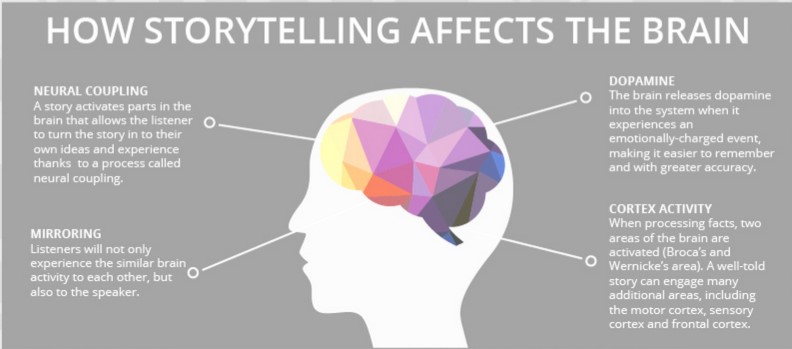
We’ll start in that bottom right corner with cortex activity: Brain research has found that when someone just says facts and words, it only activates the two portions of the listener’s brain that process language. But when someone tells a story with sensory details and actions, it activates other areas of the brain. If the story talks about a smell, like perfume or coffee, the olfactory regions light up. Hearing sentences like “Paul kicked the ball” cause activity in the parts of the brain that coordinate movement.

Annie Murphy Paul in a New York Times article “Your Brain on Fiction” said “The brain does not make much of a distinction between reading about an experience and encountering it in real life; in each case, the same neurological regions are stimulated. … reading [or hearing a story] produces a vivid simulation of reality.”

Next, we’ll look at Mirroring, there in the bottom left corner… If you look at the brains of multiple people listening to the same story, the same portions of their brain light up at the same time. And their brain activity matches that of the story-teller. When we listen to the same story together, like here at church each week, this puts us all on the same wave-length.

Neural coupling is something that happens in conversation… if the two people are not communicating well, their brain activity is out of synch. When they start connecting and understanding each other, their brain activity matches up, although the listener lags behind by about 1 – 3 seconds as they process what they are hearing. When the speaker is telling a good story, the listener can catch up – sometimes their brain activity even anticipates what’s to come, responding to where the story is going. (There’s a CBC radio show called Vinyl Café, where the host tells fabulous stories… sometimes the audience can feel where the story is heading, and has this buzz of “oh, you know what’s about to happen?!” Stuart will stop and say “Now y’all are getting ahead of me. Wait for it!”)

So, Mirroring and Neural Coupling help us to connect emotionally with the story-teller and with other listeners, bringing us all into the same mind-space together.

A final thing that happens in the brain is the release of dopamine, a neurotransmitter which helps us regulate our emotions, but also helps us set goals and achieve them. When a story stirs our emotions, we remember it better, because we’re designed to remember emotionally charged events. It’s even better when we hear the story in an environment where we feel safe and loved – that causes the hormone oxytocin to flow, which increases neuroplasticity – it helps our brains be more flexible and more open to learning.

So, when we take Naked Truth (or Logos) and clothe it in Story (or Mythos), our brains experience the sensory moments and the movements in the story as if we were actually sensing and doing those things. Our brains help us to feel connected to and similar to the people around us. And the emotions of the stories engage us, making us feel the emotions those around us are feeling.

All this combines into the power of story to Inspire Us… to help us to breathe in the truth, which then fills us with the urge or ability to do or feel something.

——-

The second key point about the power of stories is that Stories Teach. They teach in ways that we can understand, remember, and apply to our lives.

I want you to think back on some stories you may have heard over your life… stories that I know you remember…

If I say “slow and steady wins the race”, what story goes with that? [Tortoise and the Hare – Aesop’s fables – ancient Greece, about 600 BC]

If a princess kisses a frog, what happens? [He turns into a prince. Grimm’s fairy tales, 1830’s]

If a pig wants to build a house, what material should it use? [Bricks. Printed in 1840’s]

Who finds the genie in the lamp? [Aladdin]  That story appears in the tales of 1001 Arabian Nights. Who’s the harem girl that tells stories for 1001 Nights? [Scheherazade]

Stories stick with you, right?

——

Many spiritual traditions include parables that teach how a good person behaves within that spiritual tradition. Think of Jesus’ parables of the Good Samaritan, the Prodigal Son, the Lost Sheep, the Mustard Seed.

Before written language, parables survived for generations of oral tradition because stories are so memorable. Even after written language, lots of classic tales continue to be told to generation after generation.

And we create new stories every day. We share them for many reasons, one of which is to teach. Again, stories help people to understand, remember, and apply what the teacher is hoping they’ll learn.

Jennifer Aaker, a professor at Stanford tells of a colleague who asked students to make a 1-minute sales pitch. They all used statistics – 2.5 on average. But only one out of ten students actually used a story in their pitch. The researcher then asked the class to write down everything they remembered about each pitch. Five percent of the students cited a statistic they had heard while 63 percent remembered the story.

A good teacher will still include plenty of facts and statistics that verify the validity of what they are teaching – that speak the language of Logos, but we weave stories in and amongst those facts to help them to stick.

I’m going to share with you an example of a story I tell in a childbirth class…. One of the messages I have for the dads, and other loved ones who will be supporting someone in labor, is that they need to provide the kind of support that works for the laboring mom, even if that looks very different from what they think they would find supportive in a similar situation.

I could lecture on this for several minutes, and my students would understand me, but they wouldn’t remember. I could give specific examples – that helps them to remember… but it doesn’t help them apply it, because they’re still listening just with their academic heads. But if I tell them a story with sensory details and movement and emotional content, they hear it with their hearts and their bodies, and they understand it, remember it, and can apply it.

So, I’ll share a story I tell from when I worked as a doula. A doula is a trained professional who provides emotional and physical support for women in labor.

Once, I was called in as a backup  doula – the person who was supposed to attend a birth had a medical emergency. So, I walked into the labor room, truly knowing nothing about the laboring mom other than her name. I learned she was from Pakistan. According to every cultural expectation she had, her mother was supposed to be at her birth. Her mother could not get to the U.S. due to a travel visa issue. The laboring mom had several relatives in town, including her husband. But they were all male. Again, by every cultural expectation she had, men do not belong at a birth. So, the only person there to support her was me – a stranger, who knew nothing of her culture.

I asked her: If your mother were here, what would she do for you? I asked … “When you were young, and you were sick, what did you mother do?” She said “Oh, she would sit next to my bed, and stroke my hair and gaze into my eyes, and say “No one should ever have to suffer like this. My poor, poor baby.” [Pause]

Now, you have to understand just how different that is from my experience. I grew up in Wyoming, in a military family. We’re tough, independent folks. Dad’s theory was ‘If you’re not dying, just get up and go to school.” So this woman’s story of what her mother did just struck me as odd, and I kind of dismissed it.

So, her labor progressed. I did all the things I do when supporting a woman in labor, we walked the hallways, I rubbed her back, she took a bath. I was doing all my usual stuff and it wasn’t working. She kept saying “I can’t bear it. I can’t bear it.” I put on my Wyoming cheerleader hat, and was doing the “you’re doing great, keep it up” routine. And I could see it wasn’t working. Then I remembered what she had said about what her mother would do when she was sick. The next time she looked at me and said “I can’t bear it”, I said “I know. I’m so sorry. No one should ever have to suffer like this.” She looked at me and sighed “Yes….” Because finally I understood.

She went through the rest of labor, no longer suffering because she had the kind of support she needed. She gave birth to a beautiful boy with a headful of dark curly hair, whose crying settled the moment he heard his mother’s voice.

At this birth, I re-learned what I should have already known. Whenever you are supporting someone in distress, whether it’s labor, fear about a medical test, grief over the loss of a loved one, or whatever, you have to put aside your own assumptions about what would help you if you were in distress. You have to be open to them and their needs and their story. You have to be present and ask them what they need – and believe them when they tell you what they need.

So… that is how I use story in my work. Within that same class, I’ve quoted statistics. I’ve cited research. I’ve explained about the physiology of birth. I have spent much of class talking to their rational mind in the language of Logos. But the places that connect most deeply in helping them to understand, remember, and apply what they’ve learned, is when I step into this world of Mythos – the language of story.

—–

A final key point about story is its ability to change hearts and minds.

Andy Goodman, a consultant on non-profit communications, says “Facts alone don’t have the power to change someone’s story. If you’re in the business of changing how people think, what they believe, … how they act, you’re in the business of changing the stories in their brains. Stories are like the software of the brain. They tell our brains what facts to let in, and what facts to reject.”

Yes, the 11th century metaphor was that stories tell us who to invite to join us at our fire, and the modern metaphor is stories as the software of the brain… but both acknowledge the importance of stories.

In the book The Dragonfly Effect, Jennifer Aaker tells the story of Sameer Bhatia, a young Silicon Valley entrepreneur and Vinay Shakravarthi, a young doctor, who both had leukemia, and urgently needed a bone marrow transplant. Only 1% of the people in the bone marrow registry were south Asians. Their chance of a match was 1 in 20,000. Sameer’s tech savvy friends tuned to social media. They needed to share a story that would engage and inspire. So, they told the story of Sameer and Vinay – “brothers, husbands, sons…. Jokers, peeps… kind of like you (or your brother)”. And they included the story of how easy it is to organize a bone marrow registry drive, how easy it is to be tested, and how painless it is to donate if you’re found to be a match. “You could be a hero. You could save lives.”

sameer

They told this story on Facebook and Twitter and YouTube and they asked everyone who saw it to share it with their friends. Within 11 weeks, 24,611 South Asians had signed up for the registry.

Sameer and Vinay had matches, and received bone marrow transplants.

But it was too late, and both died.

But in the year after this drive, 266 other South Asians were matched and received transplants, and many more in the years since then. This would never have happened without the work of Sameer and Vinay’s friends.

The story they told engaged people and made them take action.

—–

Now, it’s important to know that not all stories work. Those long rambling stories with no point – yeah, they don’t work! A story that is only about an individual with no tie to the universal does not work.

We have to tell a story so that the listener is engaged, they identify with the subject of the story) and they can imagine themselves taking an action. If the story just says “here’s how this person is different from you”, they might feel bad for them, but they’re not motivated to do anything. But if the story says “imagine yourself in this person’s shoes”, they are more likely to connect to their experience, and want to support them.

I’d like to share an Islamic parable:

A blind boy sat with a hat by his feet. He held up a sign which said: “I am blind, please help.” There were only a few coins in the hat.

A man was walking by. He dropped a few coins into the hat. He then took the sign, and wrote some words. He put the sign back so that everyone who walked by would see the new words.

Soon the hat began to fill up. A lot more people were giving money. That afternoon the man who had changed the sign came to see how things were. The boy recognized his footsteps and asked, “Were you the one who changed my sign? What did you write?”

The man said, “I only wrote the truth. I said what you said but in a different way.”

What he had written was: “Today is a beautiful day and I cannot see it.”

Both signs told people the boy was blind. But the second sign helped them to empathize with the boy and see the abundance in their own lives, which motivated them to give.

——-

Michael Margolis, a self-proclaimed Business Storyteller (i.e. marketer) says “The stories we tell literally make the world. If you want to change the world, you need to change your story. This truth applies both to individuals and institutions.”

If we want to create change, we need to tell stories about how the world could be.

A few years back, I worked with Washington United for Marriage on the campaign for Referendum 74 for Marriage Equality. And although they certainly shared statistics and legal facts in their materials, an essential tenet of the campaign was that the real way to change people’s hearts and minds would be to tell stories. Stories of people who just wanted to get married.

It was easy for many people to buy into stereotypes about the gay and lesbian community, and think that they had nothing in common with “those people.” As long as they focused on the differences, they had no desire to support ref. 74.

But if they heard people who were like them tell stories about why marriage equality was important to them, and those stories were told in a way the listeners could relate to, the listeners were more likely to support referendum 74.

It helped if they saw ads, or spoke to phone canvassers, or listened to speakers at events. But, far more powerful than strangers telling stories, was if someone’s friends, family members, church members, or co-workers told them stories about why they supported marriage equality. So, Washington United asked their supporters to share their stories. That is the most powerful way to change hearts and minds. In the end, referendum 74 passed, 54 to 46% statewide.

Stories build bridges. They help us to connect with other people and empathize with their challenges. As poet Ben Okri said, “Stories can conquer fear, you know. They can make the heart bigger.”

I want each of you to think about a change you want to see in the world. Maybe it’s a big societal change – whether your cause is climate change, homelessness, gun violence, immigrant rights, LGBT rights, standardized testing in schools, or whatever. Maybe it’s just a small change in how you interact with someone in your own life.

I want you to think about the stories you tell yourself and tell others about this situation. Think about the stories that other people tell – the media, the people on the streets, your friends and co-workers. Where are we stuck in a negative story? If the story is “things are awful and they’ll never get better”, they won’t. If the story is “we’re all different and you just have to take care of the people who are like you,” that’s all we’ll do.

But if your story is “look at this other human being – see how they are like you and want what you want”, we are all more likely to care for each other. If you say “here’s my personal story and why I think things can get better and what steps I’m taking to make them better…” your listener is more likely to see what steps they could take to make their world a better place.

That is the power of story.

——————————————————–

Closing / Extinguish Chalice: Suzy Kassem in Rise Up and Salute the Sun, wrote:

“To really change the world, we have to help people change the way they see things. Global betterment is a mental process, not one that requires huge sums of money or a high level of authority. …If you want to see real change, stay persistent in educating humanity on how we are all more similar than we are different.

Don’t only strive to be the change you want to see in the world, but also help all those around you see the world through commonalities of the heart so that they would want to change with you. This is how humanity will evolve to become better. This is how you can change the world.”

Benediction: An Indian Proverb says: “Tell me a fact and I’ll learn. Tell me a truth and I’ll believe. But tell me a story and it will live in my heart forever.” Go forth, and tell your stories. Amen.