In these challenging times, could you use a little lightness in your heart? A little boost of hope to give you the energy to keep on fighting for what’s right? Check out Hopepunk books!
What is Hopepunk?
Hopepunk is a genre of speculative fiction (sci-fi). In 2017, Alexandra Rowland coined the term. They went on to say:
Hopepunk says that kindness and softness doesn’t equal weakness, and that in this world of brutal cynicism and nihilism, being kind is a political act. An act of rebellion. It’s about DEMANDING a better, kinder world, and truly believing that we can get there if we care about each other as hard as we possibly can, with every drop of power in our little hearts.
True hopepunk is not just “hopeful” and not just “cozy.” This article in Vox further defines it:
[hopepunk is] a narrative message of “keep fighting, no matter what.” … [not just] a brightly optimistic state of being, but as an active political choice, made with full self-awareness that things might be bleak or even frankly hopeless, but you’re going to keep hoping, loving, being kind nonetheless.
Hopepunk is in the eye of the beholder, so not everyone agrees on what counts. For example, though Becky Chambers’ books appear on virtually every list of hopepunk books, Brendan Hughes argues that Chambers isn’t really hopepunk because her stories aren’t really set in dark times. So, perhaps all the books I list here won’t be strictly “hopepunk” but they are all books that I loved that lightened my load as I read them.
I love a good spaceship battle as much as anyone, but the things I’m most interested in writing are the little moments. An exchange between friends. An argument that affects no one but the participants. A bad day. A good day. A meal. A home. Because that’s the stuff that we actually spend our lives on, right? The grand majority of us aren’t embroiled in big political to-dos or planetary problems. We’re just trying to feed our families and do good work and find some meaning in it all.
More:
Set My Heart to Five by Simon Stephenson. I just finished this book and found it a delightful read. A bot, programmed not to feel, sees old tearjerker movies and finds his shirt is inexplicably wet after the movie – maybe an environmental irritant caused his eyes to water? Then he gradually awakens. A tribute to the beauty of humanity, while being ironic and witty. (A little like Murderbot in vibe.) Back in 2020, rumor was that Edgar Wright was doing a movie of this – would love to see that happen!
Station Eleven by Emily St. John Mandel. While this is certainly not a Polyanna everything is happy book, the idea of a traveling symphony performing Shakespeare in a post-apocalyptic world feels hopeful to me. The Station Eleven series on HBO Max was very good but differed substantially from the novel.
The Calculating Stars by Mary Robinette Kowal (and other books in the Lady Astronaut series). An alternate history where in 1952, a meteorite obliterated much of the east coast of the US and will make Earth inhospitable. How the lady astronauts (and other diverse folks) help save humanity.
Project Hail Mary by Andy Weir, and his other books. (And the movie The Martian.) I also like these books (and several others on this list) for being what podcaster Jeff Cannata calls “competence porn” – smart people doing smart things. Here’s a post I wrote about The Martian as a study in character.
Upright Women Wanted by Sarah Gailey. I debated about including this one, as I don’t feel it was as good as I wanted it to be. But… how can you resist a pulp western style novel with queer librarians traveling a post-apocalyptic world to spread resistance against authoritarianism.
All Systems Red by Martha Wells. The first in the Murderbot series.Where yes, a “murderbot” hacks their system to claim its freedom and despite claiming they would prefer watching soap operas, keeps helping out the humans around them with a grudging affection developing. Although I really liked this book, I didn’t want to pursue reading more in the series. Murderbot on Apple TV was a fun series, worth watching. Darkly optimistic.
The Bear by Andrew Krivak. Different from anything I’ve ever read in terms of pacing and plot. Just spending time with the last two humans on earth (father and daughter) and how they survive, even as one is lost.
Some books I read long ago that I think qualify as hopepunk, though I’d have to re-visit them to be sure: The Left Hand of Darknessis Ursula K. Le Guin’s; Woman on the Edge of Time by Marge Piercy, Handmaid’s Tale (yes it’s dark… but Rowland used it as an initial example of what counts as hopepunk) and The Fifth Sacred Thing by Starhawk. (An idea from this book has been in my head for decades now… in any community, there are jobs that nobody wants to do like perhaps cleaning toilets or hauling trash – what if every citizen spent one day of their week doing one of these thankless jobs?)
And the Hunger Games and many other dystopian YA would fit in the Hopepunk realm of people finding ways to choose kindness even as they fight cruelty.
Here are a few books that I haven’t read yet that appear again and again on lists of recommended hopepunk: Light From Uncommon Stars by Ryka Aoki; Parable of the Sower or Dawn Octavia Butler; The House in the Cerulean Sea by TJ Klune; and This is How You Lose the Timewar by El-Mohtar and Gladstone.
Escaping or Re-charging?
I am writing this post on January 30, 2026, which many people across the US are recognizing as a “general strike” day against the Trump administration. This is not a time in history when I believe we can just “escape” from the world and ignore what is going on. I do believe that we need to find ways to keep our energy up and keep our hope alive, and maybe these books will provide that little respite for you.
I encourage you to check out a post by Alexandra Rowland. They say not to mistake the hopepunk genre for the “noblebright” genre.
Noblebright is about goodness and truth and vanquishing evil forever… The work will never be finished. ….Evil cannot be vanquished, only beaten back for a day or two… Ask it of hopepunk, then: “What’s the point?” … The fight itself is the point…. It’s about doing the one little thing you can do, even if it’s useless: planting seeds in the midst of the apocalypse, spitting on a wildfire, bailing out the ocean with a bucket. Individual action is almost always pointless. Hope and strength comes from our bonds with each other, from the actions we take as a community, holding hands in the dark.
I have a magnet on my car that reads “choose kindness, show empathy, demand justice” and that seems a good encapsulation of the hopepunk world view.
Fifteen Cozy Sci-Fi Recommendations for those who like Becky Chambers work that: “possess that same quality of gentle wonder, that same belief in kindness as a worthy pursuit, that same insistence that the universe… need not be cruel.”
Note: This post includes Amazon affiliate links, because that’s an easy way to take you to a book description and reviews. (And yes, if you buy something after clicking on one of those links, I do get a small bonus, which helps to support my work.) But rather than supporting Amazon, I encourage people to support their local libraries (like KCLS in King County, WA) and independent bookstores.
Check out Book Riot’s list of independent bookstores around the country, or check out IndieBound, where you can choose to shop directly from them but some of the proceeds are sent to independent bookstores, or you can choose “shop local” to be transferred to your local store’s website to complete the purchase. Or, if you read e-books, Bookshop.org allows you to support local independent bookstores but buy and read in your web browser or on an iPhone or Android app.
TLDR: I designed a banner to hang in my church’s sanctuary that represents the UUA Shared Values. I’ll share all the details of my design process here, just in case that’s helpful for anyone else who is working on their own design. In a separate post, I’ll share printable patterns you could use to create your own banner with craft felt and glue (or fusible interfacing), felted wool appliqué, quilting or other media.
What are the UUA Values?
In June 2024, the Unitarian Universalist Association adopted Article 2, which included these six shared values, with love at the center.
Justice: We work to be diverse multicultural Beloved Communities where all feel welcome and can thrive.
Equity: We declare that every person is inherently worthy and has the right to flourish with dignity, love, and compassion.
Transformation: We adapt to the changing world.
Pluralism: We are all sacred beings, diverse in culture, experience, and theology.
Interdependence: We honor the interdependent web of all existence and acknowledge our place in it.
Generosity: We cultivate a spirit of gratitude and hope.
Words or Icons: The UUA logos by Webster shown above are very dependent on the words for each value – long words like interdependence just don’t work well for appliqué, so I knew using icons would be a better approach – I brainstormed ideas for icons, and then I discovered Catherine Loya’s icons and she’d come up with almost the exact same set of ideas I had! It’s always a good sign for the recognizability of icons when they seem apparent to a variety of people.
Flower Shape: I played with the idea of using the UUA flower image but replacing the words with icons on them, but the icons would have been fairly small in the overall image, and would be hard to view from across the room. I preferred the flowers by Loya and especially the flower by Madaline Natale, which gave a bigger space for the icons. I preferred Natale’s pointed petals, as I worried the heart-shape on Loya’s just added too much visual information.
For Colors: I assumed that they all were rainbow color and I expected that there would be a standard layout of colors, and that each of the values would be associated with a particular color. But when I looked closer, I discovered that the UUA graphics don’t even have all the rainbow colors. Loya has them, and in rainbow order, but read counter-clockwise. Natale has the rainbow colors, read clockwise with red at the top, and that felt right to me.
There is zero consensus in how the colors lined up with the values.
Value
UUA flower
UUA atom
Loya
Natale
generosity
green
pink
green
blue
transformation
pink
blue
purple
yellow
equity
purple
green
red
orange
pluralism
blue
red
blue
green
interdependence
red
purple
orange
red
justice
yellow
yellow
yellow
purple
I tried really hard to come up with some logical way of connecting things to a color… like I felt like green could be generosity (money is green and that’s one form of being generous) or green could be the interdependence of nature, but I couldn’t make any other good arguments for what color should be which.
Order of Ideas: There was also no consensus for what order to list them in. The UUA language has them in this order. IPGTJE (interdependence, pluralism, generosity, transformation, justice, equity). But there’s a goofy mnemonic that can be used for remembering all the values, which is JETPIG. (Here’s one fun song about JETPIG, and here’s a song with hand gestures.) So, that’s the order I chose.
In the end, I put the colors in rainbow order, with the red at 12:00, and the other colors in clockwise ROYGBP order. I started the JETPIG order at 12:00, so Justice is red, equity is orange, and so on.
My Final Design
UUA Shared Values
A six petaled flower, with a pink heart in the center representing love.
The red petal has the scales of justice, which is a common, and thus easily recognizable and memorable, image for Justice.
Loya’s icon turned this into three little snowmen standing on boxes. I decided to use a “meeple” shape that looked a little less abstract / more human, but would still be easy to appliqué. (Note: I am well aware that this icon does not represent all people – I have one leg myself, so it’s not what my own personal meeple would look like, but it is a simple representation of a human shape.)
For Transformation (on yellow), I’d originally considered a butterfly, but I think Loya’s use of the chrysalis is much better than a butterfly. The butterfly implies that the process of transformation is complete, versus the UU value of continuous adaptation to a changing world is like a chrysalis in the midst of changing.
For Plurality (on green), the interlocking circles address intersectionality and diversity in community. We are all unique individuals, but can come together to find our commonalities and the ways in which we overlap to work together as a diverse whole.
For Interdependence, on blue, what could be better than a spider web, which reflects the previous UU language of “the interdependent web of all existence.”
For Generosity, on purple: I liked that Loya’s icon captures a chalice feel with the two hands holding up a flame with a heart in it. However, my partner suggested that the two hand image looked more like support or “lifting something up”, and that a single hand handing the flame to someone as a gift would better represent generosity.
Appliqué Project
I made two versions. Left: has acrylic felt backing and icons, the colored felts are wool, and it is held together with fusible interfacing. Right: all felted wool, with the pieces sewn on with embroidery floss and blanket stitching.
I made two handouts / posters to accompany these. The first one just uses the text from the UUA describing the Values, with my icons next to each. The second is sort of an “artist’s statement” that describes why each image was chosen to represent the value – it is my hope that describing the ideas behind the design will help make it easier for people to visualize and remember the Shared Values.
The Unitarian Universalist denomination has “shared values” that are represented in this banner: Justice, Equity, Transformation, Pluralism, Interdependence, and Generosity, with Love at the center.
This post includes free downloadable patterns with instructions for assembling your own applique project. Learn more about the design process here. Or, for a quick overview of what all the symbols mean, check out the explainer sheet near the bottom of this post.
Materials for Appliqué Project
First, decide if you want your design to be 18″ wide or 24″ wide. (for either one, the length is flexible – for example, you could make a square banner or you could choose to center the 18×18 design on a 18×24 rectangle like I did.)
Then decide how you plan to assemble it. You could glue it together (I’ll include info below on my testing of this process, and why I didn’t end up using it) or use fusible interfacing to attach all the items, or you could fuse then sew/embroider them on for a true appliqué. The fusible interfacing method is fairly quick – I was watching movies while I did it, and I think I did the whole project start to finish in two rom-coms. For the appliqué, I worked on it off and on little bits at a time for weeks, so it’s hard to estimate total time. Here are the results side by side. The fused one looks a little more “crafty” and the appliquéd one more polished, I think. (Though part of the difference is also in the backing fabric – acrylic vs. wool felt.)
Fabric
You’ll need white or off-white felt for the background and the icons. The whiter backing fabric is this acrylic felt – you can get a 36×36 square for $12.90. (This is shown in the picture below.) Or you could choose a nice felted wool, like the right hand picture above. You could make an 18″ banner with a half yard (approx 26 x 32). If you want to do a 24″ banner, you’d need a half yard for the backing plus a “small piece” that’s 8 x 13 for the icons. Or just get 3/4 of a yard.
Colored felts – in red, orange, yellow, green, blue and purple. You’ll need them to be at least 6×7 inches for the smaller banner, or at least 8×11 for the larger banner. (I used wool felt. I bought them at my local shop that dyes their own wool – you can order from them online at Carriage Country Quilts. Their “Crayon Box Wool Bundle” with 8×13 pieces of all 6 colors is $33. It is similar to the collection on the left in my photo – all basic colors, no texture. (The bundle on the right I hand selected for particularly interesting colors and textures.)
Pink felt for heart. At least 6×6 for smaller banner, or 7×8.5 for large. If you’re ordering from Carriage Country, a “small piece” would be enough – just add a note asking them to choose a pink that looks nice with the rainbow bundle.
For a lower cost option, you could use these wool blend sheets for the petals (you get 28 different colors for $15. Choose 30×20 cm = 11.8×7.8″).
Notions
I recommend HeatNBond fusible interfacing. (Alternatives are Beacon Felt Glue, a glue gun or Aleene’s Tacky Glue) but I really prefer interfacing.) You’ll need one package for a small banner or 2 for large.
That’s all you’ll need if you’re just fusing it together. If you’d like to actually do appliqué stitching on all the elements, you’ll also need: One skein of embroidery floss in each of the 7 colors and one in white. For the applique, I use a blanket stitch. (There’s lots of tutorials online.)
If you want to hide your stitching on the back when you’re done, you’ll need: Backing fabric—could be the same as the background or could be something stiffer to help it hang well. Thread for stitching the background to the backing.
Patterns and Instructions
Here’s the pattern and full instructions for an 18×18 design.
I created an “explainer sheet” to post with the banner that talks about UUA shared values. It includes a description of the icons, a mnemonic for remembering them (JETPIG) and a great JETPIG image from spaceMaverick.
I tested glueing it together. If you’re planning to glue the project together, be sure to test your glue on some small scrap pieces of felt before assembling the whole project!! Some glue will soak through felt or cause puckering and lead to a cheap-looking final product, and some glue won’t hold the pieces together. You could likely use a glue gun or Aleene’s Tacky Glue (my favorite all purpose glue!) and get good results, or try a specialty glue like Fabric Fusion or Beacon Felt Glue. I tested Beacon Felt and it looked good, but I ended up deciding that it was actually easier to use an iron-on fusible interfacing, and I also think the final result looked better. On these test runs, the glue is on the top in all three examples, and the fused is on the bottom – you can see that it looks crisper.
A note about colors:
In my first project, the yellow just didn’t have enough contrast with the white, so from a distance it’s hard to discern the chrysalis. For the second project, I over-dyed the yellow to make it a little more goldenrod. I used black tea for the dye. Black tea has tannins – a natural dye mordant that sets the color permanently. Just a few tea bags, brew for ten minutes, then soak the wool till you get the desired color.
In this picture, on the bottom is the off white I used for the icons. From left to right, you can see the colors of: the fabric I used in the first project. the original color of what I chose for the second project, that fabric after 15 or 20 minutes in a hot cup of tea, and the same fabric after a few hours in tea. I think I ended up using the one I had soaked for less time.
Making a JETPIG
I had enough colored felts left to make a stuffed JETPIG to go with the banner. (JETPIG is the mnemonic for remembering the values: Justice, Equity, Transformation, Pluralism, Interdependence, Generosity) Here’s a Time for All Ages about the JETPIG, and RE curricula, and there are songs too!
The top pig is made from this pattern. The results are cute, but it would not be my recommended pattern for two reasons: the directions are completely illegible, so you have to do a lot of thinking to figure out how it goes together, and I’m pretty dubious about copyright / whether the original artist chose to make their work available on that site. The bottom pig is from this Funky Friends pattern. There is a cost to it, but it was easy to use, and has cute results. Note: I had to split the belly part into two colors to be able to make it with the scraps I had remaining. I also considered this pattern – though I would have had to make it 50% smaller to be able to make it with the leftover fabric I had. The jetpacks were just two little drawstring bags that I figured out how to re-purpose.
Note: this post includes some Amazon affiliate links just to help you see recommended products – if you click through and buy something, I do get a small payment at no cost to you. However, I encourage you, when possible, to instead shop at local independent craft stores for your supplies. The felted wool all came from a store local to me, so I include links to them in case you’d like to support them, but you can also see if you have a great local shop of your own!
I hope you enjoy this project! I’d love to see your final results: email to janelled at live dot com.
[This is the text from a sermon I gave at Northlake Unitarian Universalist Church in Kirkland, WA on 4/25/21. Listen to a recording of the service on our podcast.]
One way to think about representation in books, movies and other media is to use the metaphor of mirrors and windows. “Books can be mirrors. When books reflect back to us our own experiences, when scenes and sentences strike us as so true they are anchors mooring us to the text, it tells readers their lives and experiences are valued.” (Source.) We experience windows when we “read books by and about people who aren’t like us. It’s the only non-offensive opportunity to walk around in the shoes of another person and experience life through their eyes.” (source) When anyone, especially a person with a marginalized identity, tells their authentic story, they are inviting us in to witness their lives, and doing so, I believe, can cultivate respect for their “inherent worth and dignity of all people” and help us understand how we relate in this “interconnected web of all existence.”
Defining Mirrors and Windows
Let me step back and share where I learned the idea of mirrors and windows.
I teach classes that are for parents and children together – I teach toddlers and preschoolers, and early elementary kids. And side-by-side, I teach their caregivers about parenting.
In the field of early childhood education, for mirrors, we talk the importance of children seeing themselves reflected – our dolls need to have a range of skin colors. The plastic food in our toy kitchens should include food from all the cultures represented by our families. In the stories we read, all children should be able to find characters who look like them and have life experiences like theirs. These mirrors create a sense of self-worth, value, and belonging.
We also offer windows into other experiences – introducing the children to all the beauty of our diverse world and helping them see that even in a culture very different from their own, they can still find little reflections that reveal our common humanity.
It’s great that we’re talking about this in children’s education. I’d like us to ALSO talk about representation in the media that adults consume. About how important it is that ALL PEOPLE can find mirrors… and how those mirrors have not been available to many people. The mirrors are missing because most stories in our popular media are written by people who are white, cis, straight, middle class, Protestant, educated, able-bodied and male. Their stories are the ones bought by publishers and producers, because those are the stories they believe the audience will buy. If diverse creators come in with more diverse stories, they’re told – “oh, your story won’t sell – it might have some niche appeal, but most people just don’t want stories like that.”
But when those folks’ stories are not told, it means everyone else is missing windows into those worlds… windows that could broaden our perspectives, enrich our worldviews and increase our empathy for others and desire for justice for all.
We have the ability to change the world not just through political votes, but also with our economic votes. If each of us were to choose to read and watch more diverse stories, and elevate them into the broader conversation, we could prove there is a market for these stories. This can be a part of our social justice activism. And, we’ll bring richness to our lives as we peer through windows into the lives of people whose identities are different than our own.
I want to say up front that I’m talking about all sorts of identities. I don’t just mean racial and ethnic diversity. I’m also talking about stories of people of all religions, all abilities, health and mental health status, neurotypical and neurodiverse, all genders, all sexual orientations and family compositions, different socioeconomic status, rural and urban, liberal and conservative, military to gig economy, sci fi geeks and readers of romance, and so much more. No matter what our identities, we deserve to find mirrors, and we benefit by peering through windows.
Experiencing Mirrors
I encourage you to take a moment to reflect on your experience of mirrors in the media. Have you ever read a book where you’re meeting a character, and you think “oh my gosh… that person is exactly like me?” Or have you ever watched a movie, and thought “That’s my life – I’ve had an experience just like that!!” Or seen a character in a video game where you think “oh, those are my people!” And maybe you identified with EVERYTHING about a character. Or maybe you just saw one little part of a character that you had in common – but you still felt seen. “I thought I was the only one who likes to eat all the frosting before I eat the cake!”
All of those experiences can be described as “mirrors” – finding yourself and your life experiences reflected in a story. And it’s important, and it’s powerful when that happens. It helps you to feel like you matter and you belong. And it MIGHT have given you a sense of possibility… “people like me can be…”
Mandy Shunnarah says: The ability to see yourself in books is a beautiful thing and I hope every reader has the experience of feeling understood on a deep level through reading. While I wish that for everyone, it’s much easier if you’re …. straight, white, and able-bodied, you can see yourself in hundreds of thousands of books, in virtually every imaginable genre. People of color, LGBTQIA people, and disabled people can’t say the same. The ability to see yourself in books––whether as you are in reality or in an aspirational sense––is a privilege, one readily available to some, but not all.”
I would love to share with you some stories of people whose stories are under-represented finally finding their mirrors. You can read the quotes – all about the immigrant experience, or watch the video (which includes LGBT, disability, and race as identities), or both! [Or you can skip to the next section.] I include links so you can read/watch their full story.
On /Filmcast, my favorite movie podcast, the hosts have shared a few stories from their experience… One has said “In the movie Hook, I saw the character Rufio – the chief of the lost boys – he was a brown kid! Brown like me – it was the first time I’d ever seen that in a movie.” Another said: “In Always Be My Maybe, the scene where all the Asian kids were at a birthday party, and when they came in from the backyard, they all just took their shoes off and lined them up next to the door – that’s what it was like at every party I went to as a kid.”
Supriya Keklar says “I’m thankful for Love, Hate & Other Filters, by Samira Ahmed. It’s the story of… an Indian-American, Muslim teenager living in a small Chicago suburb… [This book] happens to be the first time I ever saw myself in a book…at the age of 37. It reiterated to me, as a writer, just how important it is for all kids to see themselves in books.”
Claribel Ortega: “I lost count of how many times I read The House on Mango Street as a kid. … It was the first time I felt really seen, in any book. … Growing up in the South Bronx, never feeling Dominican enough or American enough, Mango Street was my anchor – the book I kept coming back to when I felt misunderstood by my immigrant parents and left out by my American friends. … I’m grateful to have had at least one book to help me navigate a childhood with a foot in two different worlds.
Alex Alvarez: “I can remember the first time I saw a family like mine on television. They were called the Delgados, and they lived on a pretty famous street. [Sesame Street]. Luis and Maria Delgado… played by a Mexican-American and a Puerto Rican actor acted and sounded a lot like my own parents. …. they made me feel, from an extremely early age, that my story was one worth telling, one that deserved to be on television and shared with an audience.”
Janice Bae: “All the books I [read] told stories of quirky white American children dealing with problems that seemed like fantasies to me… These books built an image of what being a “normal” American kid meant and the more I realized I didn’t fit this image, the more I took it as a personal failure and an inherent flaw of my family. …. I happened upon A Step From Heaven by An Na…. I could relate to everything in this story: not speaking any English when I started grade school, an abusive father who beat his wife and children, …spending idle afternoons behind my parents’ business…, the shame of concealing your home life from your American peers… I devoured the book in two sittings and felt a tragic sense of loss when I finished it. I searched in vain for other books that could do the same but to this day, I’ve never found one that came so close to being relatable, to understanding me on that kind of level.
I’ll let Eric Anthony Grollman summarize mirrors… “To not only see LGBT people like me… but to see them loved by others, or in love, is emotionally overwhelming because these images are new to me. I am disappointed, however, that I have to feel such joy just to see someone who looks like me — a joy whites, men, heterosexuals, and other privileged groups do not experience because their representation is the norm.”
Representation by the Numbers
Let’s take a look at a few statistics. Let’s start with racial diversity in children’s books. (source)
You can see that American Indian, Latinx and Asian children have little tiny mirrors. White kids… are surrounded by mirrors in their books. For comparison, the percentage of US Children in each group is 1% American Indians, 26% Latinx, 5% AAPI, 14% Black, and 50% White. It did improve by 2018. (See updated illustration.)
In 2018, 50% of main characters were white, which lines up perfectly with the actual population, and the representation numbers for American Indians, Asian-Pacific and African American are closer to parity. The biggest problem in 2018: although 26% of children are Latinx, only 5% of main characters in the books they read are. While 27% of the characters are animals, trucks, crayons, etc.
And gender representation in children’s books? Main characters are twice as likely to be male, and for ALL characters, there are three males for every two females. (Source.)
Disability Representation? 13% of US students receive special education services for physical disabilities or learning disabilities. But in 2017 books, only 3% had a disabled character and only 0.3% were main characters. (Source) And of course, in older books, the percentage would be even lower.
Is it better in media aimed at adults? So, our population is about 50% women, right? In movies from 2011-17, women had one-third of leading roles, while men had 2/3. (Source)
Race? Non-whites make up 39% of the population, but only 19% of lead characters. It is much better than it was even a few years ago, but there is still a very long ways to go. And it’s not just lead roles that are lacking… when we look at ALL characters, we still see whites are over-represented, and all other populations are less likely to see mirrors on screen. (Source)
How about disability? The CDC reports that overall 26% of Americans are living with a disability. But in movies, only 2.7% of characters have a disability.
While women are generally under-represented in film, a particularly invisible population, as you can see on the right, is LGBT females, who did not appear in 91 of the top 100 films. (Source)
The lack of diverse characters also means a lack of opportunities for diverse actors. As some examples: African American women play a lot of nurses and waitresses. Asian American women play a lot of doctors and judges. Muslim American men are often cast as terrorists. And that’s not even addressing the issues of blackface or yellowface or straight cis actors playing LGBT roles, or the fact that most disabled characters are played by able-bodied actors. In Glee, the character Artie was in a wheelchair… but the actor was able-bodied. In one fantasy sequence, he jumped out of his chair and led a big dance number…
Not only is diversity under-represented ON screen, behind the camera there are huge disparities. The vast majority of film directors are male – 96% in 2016. Writers’ rooms are better, but there’s still just one woman for every 6.5 men amongst film writers. [source]
It’s similar in TV: While almost 40% of Americans are people of color, only 9% of television shows were created by a person of color. [source] And why is that? It’s because almost all the people who decide what movies and shows get made are white.
Note: On April 22, 2021, a new Hollywood Diversity Report was released, that indicated that 2020 was perhaps the most diverse year ever. Which is exciting news! But it’s also worth considering that many major budget movies that were supposed to be released in 2020 were put on hold till 2021, so that might skew the numbers.
Stereotypes and Hollywood Tropes
One side effect of the lack of diversity in the creators is that when characters from under-represented groups DO appear, they often appear in certain stereotyped ways, to serve a standard trope.
On the rare occasions when a disabled character appears, there’s only a few possible story lines –the tragedy story, or what the disability community calls “inspiration porn” where the character “overcomes” their disability. We rarely see characters who just happen to be disabled but that’s not their whole story.
Zeba Blay, a Black woman, wrote: “I’ve seen [people who look like me]… as a housekeeper, a teen mother somewhere in the “inner city,” a child soldier, a slave…. ”
Carol Kuruvilla, a South Asian-American wrote: “In Bend It like Beckham, I saw a brown girl like me… Jess wasn’t just the nerdy best friend, the submissive shy girl, or the exotic temptress (all common tropes for Asian women). She was the main character ― a girl with many layers and quirks…”
Charles Yu, an Asian-American author wrote: “I watched a lot of TV as a kid. Growing Pains. Who’s The Boss. Family Ties. Mr. Belvedere. I watched attractive white people living in huge houses, and eating a lot of pancakes. There were a few black people. Arnold and Willis. Theo and Rudy. No Latinos. No LGBTQ. America, according to my television, was a country of, by and for white people. Whenever I did see an Asian, all my family would be excited for about ten seconds. Which was how long it took to realize the Asian was either:
Doing kung fu
Delivering food
Portrayed in a way that was kinda offensive
Preceded or followed by a gong sound, or
All of the above
As “mirrors”, these stereotypes do damage. If you are a black, Asian or Latinx person who only sees these distorted reflections, you may wonder if that is all that is expected of you in society.
As supposed “windows” these stereotypes are also harmful. A 2011 study found that black males are usually portrayed negatively, or limited to a handful of “positive” stereotypes, or missing. Audiences with little exposure to [Black men] think these media representations show the real world. That can lead to “less attention from doctors to harsher sentencing by judges, lower likelihood of being hired for a job or admitted to school, lower odds of getting loans, and a higher likelihood of being shot by police.”
Michael Morgan, who studies media impact says “Entertainment provides the seeds [for racism and sexism], because we’ve seen a thousand images of ‘Latinos are violent,’ or ‘Asians are invisible,’ or ‘blacks are this’ or ‘women are that,’ so it is so easy to exploit because it’s a knee-jerk reaction. [People think] ‘Oh yes, yes, of course. I know that.’”
On the other hand, if the show included nuanced storylines with sympathetic portrayals, it motivated the viewers to take real-life action to support the rights of people who have that identity, such as when immigration storylines were covered and viewers then attended community events or rallies or signed petitions on immigrant rights.
We need more stories
We need fewer of these stereotypes, and tired tropes. We also just need more stories… more representation. As the video at the start of the service said – there is danger in a single story.
For example, published representations of the autistic experience that are written by actually autistic authors are very rare. And, even if one piece is excellent, a common phrase of neurodiversity activists is “if you’ve met one autistic person – you’ve met one autistic person.”
About 20 years ago, a book called “The Spirit Catches You and You Fall Down” came out and it had a lot of important things to say about the need for cultural sensitivity in the health care setting. But, then it started to be over-generalized and people of Asian descent were frustrated, saying “because the nurses read one book about Hmong beliefs, they think they “understand” all Asian people.”
Zeba Blay wrote there’s an idea “that Uzo Aduba can be the inspiration for all dark-skinned black … actresses, or Shonda Rhimes can be the beacon of hope for black women who want to be TV bosses. In reality, no one black woman can encompass the entire black experience… That’s why more representation, more complex portrayals of all identities are needed in media: the black female experience is not just one thing. Neither is the queer experience, the Muslim experience, or the experience of having a disability.”
The barriers to diverse media
We need access to many stories about diverse identities and intersections of identities, ideally all created by people who have those identities and can create authentic, deeply layered portrayals of characters living full diverse lives. Why are there so few of these stories?
It is because when people of color, queer folks, and disabled folks and so on come in to do their pitches, publishers and studio execs say “it sounds like a great story… it’s just too niche.”
These producers talk a lot about what “the market will bear.” The assumption is that everyone will watch movies about white folks. But when there’s a movie with a black cast, a whole lot of folks look at it, and think “oh, that’s not for me.”
I admit I have been very guilty of this over the years. I am working hard right now to change that knee-jerk response of “that’s not for me”, and instead actively seek out those “niche” pieces.
But until the buying public shows there is a demand for queer-centric media, for media about Black lives, for media about actually autistic people, the gatekeepers will keep just selling the same stories.
I can speak to this personally, as a creator… I co-author a couple of books. We try to be as inclusive as possible – for example using gender-neutral language about “pregnant person” rather than pregnant woman. We work to use illustrations that show the broadest possible range of people. But on the cover of our book – on every edition so far – a white woman.
And yes, the authors pitched hard for more inclusive covers. But the cover design is not in our control. It is totally the domain of the publisher. And the publisher told us – these were the images with “the broadest market appeal.” Here’s the irony… our other book, which is written at a 6th grade reading level vs. 12th grade level… guess what the covers have looked like. Yeah… the publisher figured the low literacy book would appeal to people of color.
On those books, I was the new author on a team of authors with an existing agreement, so there was only so much I could push. And to get our book, with that revolutionary gender inclusive language, out there, I had to live with the cover art.
So… I am speaking about mirrors and windows today, not just because our lives would be enhanced by peering through more windows, but because representation is a social justice issue. As Unitarian Universalists, who speak of the inherent worth and dignity of every person and the free and responsible search for truth, I believe choosing Windows is a spiritual practice.
Where do I start?
I’ve started by just taking a moment… when I’m choosing my next book or my next movie, instead of just choosing a mirror, I look at what windows are available.
When Netflix or YouTube or Amazon algorithms shows me the “hey, if you liked that, here’s 10 more things you might like,” I look, and I choose the one that will most broaden my horizons.
You can search for lists of recommended works. (I have a post on “seeking diverse media” that has links to several lists and also includes criteria to help you evaluate what you read and watch.) You may have heard of the Bechdel Test, for representation of women which asks questions like “do the women talk about something other than a man.” The Fries test asks: is the disability resolved by either curing it or by killing the character? You would think these criteria wouldn’t be hard to meet but a lot of media fails them.
Many of the media recommendations you hear are for serious literary or cinematic works. Now… I have to confess… I don’t often watch or read those. I’ll hear about documentaries or dramas like 13th, I Am Not Your Negro, The Invisible War, and How to Survive a Plague. I’ll put them on my watchlist because I know that I would learn important things by taking in the full pain of those experiences. And sometimes, when I have the emotional reserves, I take one on.
But, here’s the thing – most of my media consumption is watching rom-coms and sitcoms during my morning workout, or watching sci-fi, kids’ movies or British comedies with Peter and Ben after a long day of work and school. My reading is mostly fluffy genre fiction for 15 minutes before bedtime. The spaces in my life right now are not the space for heavy emotional work.
But, even in the midst of lightweight escapes, I can still choose windows… I’m going to give a few random examples of shows I’ve watched recently… I am not saying that these are the most amazing media ever, or promising that they perfectly capture the experience of any diverse person. However, they are times when I made the simple choice of window, not mirror.
In the mornings, as I row on my rowing machine, I might watch Grace and Frankie, a great sitcom featuring characters in their 70’s who are actually played by actors in their 70’s. Or this week, I watched the Mole Agent, an Academy Award nominated documentary that let me spend time with elderly folks in a nursing home in Chile. I might watch Pose – which has great drag queen shows, and talks about the experience of trans people of color, where the actors are actual trans people of color, and so are the writers. Or This is Us – a mainstream NBC drama which includes stories about veterans, transracial adoption and being Black in America and has Black writers and veteran consultants. I might watch Worn Stories – a goofy documentary about the clothes people wear which, ironically, gave me insight into nudists. And in December, I intentionally dug up the diverse Christmas movies under the giant pile of Christmas movies about straight white people in small towns in Connecticut.
For the things I watch while rowing, I don’t do my research to see who the writers and creators were. But you can tell. If it was written by mainstream folks, there’s broad strokes and stereotypes. If it’s written by someone who shares that identity, there will be tiny little details that give depth – like in Minari, where the Korean mother cleans her child’s ears with a metal tool, or in Kim’s Convenience, with episodes about the competitiveness of the church potluck at Korean church. Now… Kim’s Convenience also had a lot of stereotypes… perhaps because the Korean-Canadian creators figured that humor would sell.
So, any one of these windows is not enough, but the more times I step into other worlds, the more I can start to discern the real stories from the stereotypes.
So, I’m not holding myself up as a perfect example of someone who is doing the hardest work of examining systematic oppression. And I get that it’s a privilege to opt out of that on the days it feels like too much. But, I’m taking baby steps to broaden my world view. Just like at last week’s Earth Day service, we talked about what steps we could take to make the world better… some of us take giant steps, some take baby steps, but they all add up.
I will also note that advocates for diversity in media say things like “there is more to the being Black than slavery and civil rights”, and “the queer community has stories to tell that don’t end with characters dying of AIDS or homophobic violence.” Disability advocates say “I’d like to see a movie where the person doesn’t miraculously overcome their disability, but they just figure out how to have a fine life as an accountant who hangs out with friends on the weekend.”
So, I’ll cast my votes for the YA romance novel featuring first generation Vietnamese Americans written by one, and the postapocalyptic sci-fi novel with an autistic lead, written by an autistic person, the chick lit about the Muslim Pakistani-American dating an Indian man, written by someone who shares that identity, and the novel about Asian-American actors that addresses lack of representation in Hollywood. And for a book which provided for me a mirror I’d never seen in the media… this teen romance whose lead happens to be an amputee who chooses not to wear a prosthesis, written by someone who looks like me.
Mirrors matter – it’s a comforting relief to find stories like ours out in the world. Mirrors especially matter to those who often feel as though they don’t belong in their worlds. We can help ensure more mirrors are available by creating a market for as many diverse stories as possible. And in doing so, we open up our own windows to understanding diverse life experiences. I invite you to join me in opening more windows.
During the service at Northlake, which was held online, I asked attendees to type their “mirrors” and “windows” into chat. Here are works that had meaning for them.
TL; DR: When we choose to read or watch media that features diverse characters, created by diverse people, we get a window into life experiences that differ from our own, which helps us to build empathy and compassion. We are also casting an economic vote for more of this media to be produced, which helps increase the chance that all types of people can find themselves reflected in meaningful ways. This post includes questions to ask yourself about whether the media you are consuming is inclusive and authentic, and recommendations for books, movies, and TV shows that include meaningful representation of various identities.
Mirrors and Windows
In early childhood education, we talk a lot about mirrors and windows. When children see people like themselves in books, that reflection helps them to feel seen, and understood, and feel that their story is worth telling. When they see and hear stories about people not like them, it offers them a peek into other people’s lives, and helps to expand their horizons and their empathy.
I think it’s also important for adults to experience mirrors and windows in the media we consume – the books we read, and the shows we watch. The media I’ve been exposed to throughout my life in the United States offers me the privilege of lots of mirrors… As a white, cis, straight, middle-class, Protestant raised person, it is easy for me to find my reflection. For people of color, LGBTQ folks, and other marginalized identities, the mirrors are hard to find. There are very few characters like them in the media, and when they do appear, they are often stereotyped – either negatively or positively – or they are token background characters without agency, and they are often played by actors who do not actually share that identity. The lack of representation and the prevalence of biased tropes is because the majority of the gatekeepers who decide what stories get told (the publishers, the studio execs, the producers) are not very diverse.
I am intentionally seeking to broaden my reading and watching to include as many voices as possible from lives that are different from my own and different than those most prevalent in Hollywood. Doing so provides me a window… what one writer calls “the only non-offensive opportunity to walk around in the shoes of a person with one or more marginalized identities and experience life through their eyes.” (source) Also, when I purchase diverse books, or stream diverse movies, I am casting an economic vote for more of these stories to be told and make mirrors available for more people.
Choose Authentic, Respectful Stories
Sometimes I have to search to find stories with diverse characters, and then when I find them, they’re problematic – full of stereotypes and tired tropes. Here are some tools I use to guide me in evaluating what I am reading and watching.
Who are the creators?
When possible, check out: for books – who wrote it? Do they share the identity they are writing about? If so, it is more likely to be a more nuanced and authentic story than if someone who does not share that identity is the author. Or do they at least have a close relationship with someone of that identity? What efforts did they make to understand the identity more deeply before writing about it?
For movies / shows: who were the writers? who was the director? were there other people involved in the production who share the identity depicted? The more people from that identity who were involved in the production, typically the more authentic the story.
“Nothing about us without us” is a slogan that originated in the disability rights community to refer to the idea that policy decisions that effect people should be made with the input of those people. It has also been applied to stories – people with a particular identity should be involved in the telling. If, for example, for a movie about disability, none of the creators have that disability, and they cast actors who do not have that disability, that is a less authentic story.
Is Diversity Represented Appropriately
When you look at the data from the Annenberg Foundation about representation in film, there’s lots of problems. For example, 18% of US residents are Hispanic, but only 3.1% of characters in US films. 26% of Americans have some form of disability, but only 2.7% of our movie characters do. Women are over 50% of the population, but only 31% of the characters, even less of older characters. Of 100 top films, only 8 had a major character who was a woman over 45 years old.
So, there absolutely needs to be more diversity / representation in the media as a whole. But that doesn’t necessarily mean every movie has to be perfectly representative. For example, I just watched “Lovers’ Rock” where virtually the entire cast is West Indian, because that’s the story it’s telling. No one would suggest it needs to have more white people in it. And Dead Poets’ Society, set at a boys’ boarding school, and Dunkirk, a World War 2 drama, shouldn’t logically have more women in them. The question to ask for any one movie is: is the level of representation appropriate to the setting of the story? (And the question we ask of the whole movie industry is: why do we make so many Dunkirks and so few Lovers’ Rocks?”)
Are they inclusive? (Really?)
The first question is do people of all identities even appear in the work? Often diverse folks are left out completely. And, if they do appear, what is their function in the storyline and how are they treated? Here are some questions to ask yourself about any given work. They can be applied to any identity – race, religion, gender, etc. These questions are inspired by the Bechdel Test and the Maisy Test for representation of women / girls, the Vito Russo test from GLAAD, which addresses LGBT inclusion, the Fries test for disability, and the Representation Test.
Does the story contain a named character that is identifiably __________?
Does the _______ character have unique character traits other than only those stereotypically assigned to that identity? (Or is the only thing that makes them unique is “the gay one” or “the veteran”)
Is the _______ character important to the plot so if you removed them it would have a significant effect? (Or are they just there for colorful commentary, or setting up a punchline, to be “saved” or to meet a diversity quota – like the person in the wheelchair talking to the woman in a hijab in the background of a scene)?
Is their storyline something other than one of the standard tropes for that identity (see below)?
Does the character have to code switch or mask their diversity to be more like the dominant culture in order to be successful? (e.g. does the autistic character have to “act normal”, does the disability need to be “cured”, does the woman need to “man up”, or the immigrant lose their accent?)
Does the work have more than one _______ character?
Do characters of ________ identity talk to other characters of that identity? And when they do, do they talk about things other than _______? (So, if there are two women, do they talk to each other? And when they do, do they talk about anything other than men?)
Do people of different identities have the same opportunities? (e.g. are the lawyers and the admins both diverse, or are all the lawyers white men and all the admins women and people of color)
Is everyone’s physical body treated respectfully? (Or are some types of bodies naked while others are clothed? Some admired and others ridiculed as in fat-phobic scenes? Are signs of aging OK for some identities but not for others? Are there healthy and realistic attitudes toward body types?)
Are there intersections of identities and are those accurately portrayed? (e.g. the experience of white transgender men is very different from white transgender women which is different than transgender women of color, and a story should acknowledge that)
Is the sole function of the marginalized character to help move the story along for the benefit of the dominant character?
Just like you don’t want a story where the character is solely defined by one identity, you also don’t want the identity to be completely ignored. For example, if you had a Middle Eastern actor playing a role but everyone interacted with them like they were white, that’s not realistic. Or if a group of friends decided to meet at a London club, and the person in the wheelchair didn’t have to ask if the club was accessible. The reality is that our identities impact our lives in a broad variety of ways, and that should be reflected in a story.
Mediaversity Scores
I’ve discovered a website that looks like it will be very helpful in evaluating options. It’s Mediaversity Website – https://www.mediaversityreviews.com. It’s a movie review site where the focus is on social context, diversity and inclusion. Their reviewers include queer folks, people with disability, people of color, etc. They grade a film, where A = Inclusive AF and d**ned well made, C = diversity was not a priority, and F = how was this greenlit?
They examine these categories: technical merit- is it a good film? then they rate it on gender, race, orientation, disability – both in front of the camera and behind the scenes. These are each given separate scores, from 1 – 5 and those are averaged for the final grade. I have always appreciated how Common Sense Media rates movies for parents on several categories – I don’t worry about language in my kids’ movie viewing, but I do worry about violence, and their nuanced summaries let me make the choices that work for me. It looks like Mediaversity will be similarly helpful by allowing me to look at specific categories. I feel like because I am disabled and female, I can make my own judgments about how those topics are addressed in a film, but reading their scores and discussion of race issues will help me notice any blind spots I might have that would cause me to miss the impact of portrayals of race in a film.
Tropes to Watch Out For
Within every identity category, there are common stereotypes – both negative and positive. It’s worth being aware of those common stereotypes so you notice if that stereotype is all you’re seeing in a particular character versus seeing a fully fleshed out individual. I’ll add notes below about stereotypes to be aware of.
There are also common tropes – standard Hollywood storylines that often play out for characters with particular identities. There may be important and valuable stories that line up with these standard storylines, but if every movie you’ve ever watched about that identity tells that story, it’s time to broaden your perspective.
One Story is Never the Whole Story
Peering through windows into another identity is not a “one and done” proposition. No one story tells the full story. For example, I am an amputee due to cancer forty years ago. I could write one very real and authentic story about what it’s like to be an amputee, both in the big picture and with all sorts of specific tiny little details – like how my shirts all wear out on the sides because of my crutches and the fact that when I choose my seat in a restaurant, I’m looking for somewhere I can set my crutches that they won’t be in the way. But my story is only my story, and another amputee might have a very different experience.
Watch “The Danger of a Single Story” by Chimamanda Ngozi Adichie for more thoughts on this. And Zeba Blay from Huffington Post: “…. no one black woman can encompass the entire black experience, no matter the heights of her success. That’s why more representation, more complex portrayals … are needed in media: the black female experience is not just one thing. Neither is the queer experience, the Muslim experience, the experience of having a disability.”
So, the more stories you experience, the broader and more complete your knowledge will be. Here are some recommendations to get you started.
What to be aware of: The most common storylines for Black Americans are about slavery, civil rights, and police brutality. And yes, these stories are an essential part of understanding the Black experience, so do watch/read some of those. But you’ll see that some of the works in the recommendations I link to above tell stories about completely different topics – check out some of those too!
Be wary of works that include only stereotypes, like urban gang members, people living in poverty, drop-outs, teen moms, sassy maids, basketball players, mailmen and police officers. The negative stereotypes in media can cause real harm to Black individuals. Seek out stories that include all sorts of Black characters.
What to be cautious of: Media that paints all Asians as the same, without understanding the differences between, for example, Japanese-Americans and Vietnamese-Americans, between recent immigrants vs. 2nd or 3rd generation Asian-Americans. Also watch out for images of the overachieving model minority. Other stereotypes include: Asian women as submissive sex objects, men as meek and sexless, parents as harsh, all Asian cultures as obsessed with honor and sacrifice, and all Asian characters doctors and scientists OR they’re all workers in restaurants, convenience shops and dry cleaners.
South Asian / Indian-American Stories
Some of the lists above may include South Asian stories as well, but I wanted to call them out as a separate identity. Some of the tropes and stereotypes are similar. Add in Indian match-making tropes.
What to watch out for: Any media that assumes all tribes are the same – look for the specificity of Choctaw, or Kiowa, or Northern Arapaho, not generic “Native American.” Watch for brownface – caucasian actors playing the role. Stereotypes like: beautiful maiden, stoic Indian, magical medicine man, bloodthirsty warrior, welfare-dependent alcoholic on the rez, worker at a casino or fireworks stand. Read “Why I Won’t Wear War Paint and Feathers in a Movie Again.”
Stereotypes to watch out for – Positive stereotypes are family oriented, hard working, religious, honest. Negative: steal jobs, work illegally, refuse to learn English, less educated, have too many kids. Stereotyped roles: gang member, domestic (gardener, maid, restaurants), Latin lover, Mamacita. Learn more about the Impact of Media Stereotypes on Attitudes toward Latinos. Also: watch for things that assume that all Hispanic people are Mexican, or that lump recent immigrants from Guatemala in the same category with third generation Cuban Americans.
Stereotypes to watch out for: terrorist, wife of terrorist, religious fanatic, woman in hijab, belly dancer, taxi driver, wealthy sheikh who is attracted to white women. Notice how they always have strong accents – it is very rare to see second-generation Arab-Americans who were born and raised in the US. Read this great article about Muslim-American actors talk about their experiences with auditions and casting: “You may know me from such roles as terrorist #4.“
Immigrants are under-represented in the media, and when shown, tend to fall either into rags to riches assimilation tropes or into being shown as permanently on the outside of the mainstream society. Stereotyped storylines include getting their citizenship, working in the family restaurant / store, and going to jail. In reality, immigrants commit less crime and are less likely to be incarcerated than native born Americans, but in 2018, 34% of immigrant characters were associated with a crime. Positive storylines with nuanced characters inspired people to real-life action for immigrant rights.
Disability Tropes to Watch Out For: On the rare occasion that disabled characters are shown in movies, their story tends to be either a tragedy, a story that enables an able-bodied character to be a savior, or a story of the person “overcoming” their disability (what the disability community calls ‘inspiration porn’). And that is true of some of the movies recommended above. They may still be good movies, with valid stories to tell, but remember those are not the only stories people with disabilities have to tell. Also, most disabled characters are played by able-bodied actors. (A third of recent best actor winners at the Oscars were able-bodied actors playing characters with a disability.) Ask yourself if this had to be the case (for example, if we see a character before the accident that leads to the disability, they may need to be able-bodied to play those scenes) or if an actually disabled actor could/should have been cast.
Here are two lists of movies… some of the recommendations are OK, but the article’s introductions are really problematic, the first has stereotypes… the second views autism as a disability which can’t be “cured” and must be masked. Learn why that’s problematic in this discussion of autism acceptance month.
Recommended Works: There are LOTS of lists of recommended movies, where you can look specifically for Lesbian romances, or LGBT coming of age, or teen, or best of the 2010’s, or whatever. Here are some good broad recommendations with a wide range of identities and storylines represented:
In response to the “Bury Your Gays” trope, where queer characters are far too often killed during the course of the story, Pride offers two lists of movies with only happy endings: for gay characters and lesbians.
Tropes: For a long time, queer characters were either absent, predatory, promiscuous, or the target of a joke. As more movies began being made, they tended to focus on only a handful storylines: coming out, forbidden love, homophobic violence, and dying of AIDS. Again, these are all important stories. But they’re not the only stories.
Stereotypes to Notice: Gay Best Friend, closeted jock, transgender hooker with a heart of gold, murderous bisexual, depraved homosexual, all LGBTQ people are promiscuous, butch lesbian, all lesbians want children, lesbians hate men.
Rural America
From 2020, add Nomadland and Minari to these lists!
“Rural Voices: 15 Authors Challenge Assumptions About Small-Town America” – an anthology by Nora Carpenter.
Stereotypes to be aware of: Movies set in rural towns, especially in the south, often depict the residents as supremely ignorant, gullible, racist, xenophobic, lazy, wild drunken partiers, or hillbilly savages. Also, there are a lot of slasher films set in rural areas, and stories of crazed rapists. On the other hand, there are stories that totally romanticize small town life (like every Christmas movie), and imply that all rural people own quaint family farms. Reality: 1 in 5 Americans live in rural communities. 1 in 5 rural residents are people of color. Less than 6% are employed in agriculture – more work in education, health care, retail, transportation.
This is the text of a sermon I gave at Northlake Unitarian Universalist in Kirkland, Washington on February 23, 2020. A recording can be found here, or you can find it on the Northlake podcast, available on all major podcasting platforms.
Our monthly theme for February is Resilience. I’ll talk today about how we can help build resilience in ourselves, the children and adults in our lives, our church community, and the broader society.
So, what is resilience? And how do you know if you have it?
If you were lucky enough to never face any challenges, you’d never know if you have resilience (and honestly, you probably wouldn’t, because we build resilience by facing and mastering challenges in our lives.)
But, for most of us… challenges come to us on a far too regular basis, right?
Life’s Challenges
Anytime we face a life transition, or a new developmental stage, that’s a challenge. Whether that’s a toddler who falls down many times before they learn to walk, or the new parent who has to cope with all the tantrums that might cause. There’s midlife crises, there’s the challenges of aging… those are “expected challenges” that any developmental psychologist can tell you are typical, but that doesn’t mean they’re not hard for the people going through them.
There’s also all the unexpected challenges – the falls in the mud puddle, yet another ‘snow day’… the car that hits you and breaks your arm just when you’re settling in to your new ministry.
And then there’s interpersonal challenges – the boss who makes unfair demands, the girlfriend who says she’s “just not that into you,” or the parent who lets you down.
Challenges just keep on coming. Yep… hard times, hard times coming round once more.
But… and I know you’re going to hate it when I say this… but each of those moments of adversity is a learning experience. Each one offers “opportunities for personal growth.” Each one helps us learn how to stretch and how to bounce back.
What is Resilience?
One way of defining resilience is “doing better than expected in difficult circumstances.” We all have times when it seems like life is trying to knock us down, in small ways or in big ways. The question is: how will we respond? Will we let adversity pin us down? Or will we bounce back up again? Or end standing stronger and taller than ever before? And how can our family and our community and our faith help us to bounce back?
[note: I shared images, taken from a video we’d shown before the service, which was about teaching children about resilience.]
Resilience is a topic that has long fascinated me, and been a big focus of my personal and professional life.
I first noticed different degrees of resilience when I was a teenager. I had been diagnosed with bone cancer, and was travelling from my home in Wyoming to Denver Children’s Hospital for treatment. I was bouncing between two worlds. At home, my friends were typical teenagers facing the daily challenges of teen life like pimples, bad test scores, and unrequited crushes. At Children’s, my friends were coping with life-long disability, recovering from life-threatening accidents, or undergoing the brutal chemotherapy and poor prognoses of cancer care in the early 80’s.
When challenges appeared for people, whether the challenges were small or the challenges were huge, I saw three different types of responses to them…
Some people were overwhelmed by any challenge. Some managed to bounce back from things – at least mostly. And some were made stronger by having walked through their challenges. I wondered why.
After my treatment, I went on to get a bachelor’s in sociology, then later a master’s in social work. I worked with kids facing cancer treatment, with people hoping to receive a liver transplant in time and with people with AIDS at a time when AIDS was always a terminal diagnosis.
With all my clients and their families, I watched and wondered about resilience. Why do some people seem to have “it” and others not?
Now for 25 years, I’ve worked with parents of young children, working for Parent Trust for Washington Children, PEPS, and Bellevue College Parent Education. These are parents and children going through all of those predictable developmental challenges where people keep saying “don’t worry, it’s just a phase” but where every day can be exhausting, overwhelming, and full of worry.
I spend a lot of time thinking about what parents can do to help build resilience in themselves and in their children. And I think that we as a church community can also ask ourselves – what can we do to build resilience in ourselves, our fellow Northlakers, and in our broader community?
Factors that Influence Resilience
Resilience is a really complex issue. There’s lots of factors that influence our response to adversity. Let’s look at those:
The reality is that hard things come into everyone’s life at some point. Sometimes they’re expected challenges like a move to a new home, but often adverse circumstances arrive out of the blue – an illness, a home break-in, or a job layoff might appear in our metaphorical inbox.
When a challenge hits, we start running with it, and we figure out our response as we go along.
Several things affect our response and whether or not we end up in a good place in the end.
Some things are risk factors and others are protective. The risk factors drag us down: they challenge our ability to cope and to recover from this challenge, and increase the chance of poor outcomes. The protective factors – things that make it easier for us to cope – lift us up and make it more likely we’ll have a positive, empowered result.
What tips the balance for good outcomes is when the protective factors outweigh the risk factors. When we have so many good things going for us that the hard times are easy to overcome.
Amongst those factors that influence our response, some are on the individual level – specific to that person and the ways they interact with the world, some are found within their network of family, close friends and communities, and some factors are from the broader society as a whole.
Individual Factors
Some people are just inherently more resilient than others, no matter what life throws at them. Dr. Thomas Boyce has researched the human stress response for 40 years, and he says some people are dandelions, and some are orchids.
Dandelions are people who can go through almost anything, and be unfazed by it all. I lucked out – I’m a dandelion all the way. Orchids are a lot more sensitive – they’re more vulnerable to stress, and need more support to weather the storms. But given the right nurturing care, they can thrive and become incredibly beautiful – more beautiful than those scrappy dandelions…
So what individual factors help to make us more or less resilient?
Developmental psychologist Emmy Werner found that resilient people have a strong “internal locus of control” – they believe they are in control of their own destinies. Even if bad things happen to them, they feel they can choose how to let that impact them.
Earlier, we sang the hymn “voice still and small”, and I believe that this voice is “deep inside all.” Some of us just need more help connecting to it.
Resilient people have confidence in their own competence. And they have a growth mindset… instead of thinking of themselves as “not good” at something, they think “I’m not good at it yet. If I just keep working hard, I bet I’ll figure it out.”
Temperament-wise, it’s easier to be resilient when you have a sense of humor about life, when you’re naturally easy-going, naturally flexible, and calm… as our opening hymn said “no storm can shake my inmost calm while to the rock I’m clinging… how can I keep from singing.”
We know that our mental health is influenced by many things beyond our control – genetic, epigenetic, and environmental. Depression can make it supremely hard to bounce back from challenges, and anxiety can mean that even small challenges quickly become overwhelming as you worry about how much worse it might become. Physical illness and disability are challenging circumstances on their own, often creating chronic adversity, and they can also make it harder to bounce back from other challenges. Good mental health and physical health is a huge protective factor.
Having goals you’re working toward helps with resilience – it’s the “eyes on the prize” focus that helps you push through the hard times. Resilient individuals tend to have things outside themselves that give them a reason to get up every day. This can be an interest or passion, such as music or art. This can be big dreams they’re working toward. Or, it can be knowing that other people are counting on them.
According to psychologist George Bonanno, a key individual factor is perception – how we interpret the difficult circumstances. Do we perceive an event as traumatic or as an opportunity to learn and grow? Sometimes even something tragic, while very sad in the short term, might also be a powerful life event that changes someone for the better in the long term. This positive perception… finding meaning in loss… is more likely for people who have a spiritual or religious faith.
Family and Community Factors
Let’s look at the impact of Family and also of Close Community. Community could mean a child’s school, an adult’s workplace, or a church community like Northlake.
When these circles are healthy, they provide the key protective factor of a secure base.
From these communities, we learn our values – what does it mean to be a good person? We learn about faith – whether that’s a belief in a higher power, or a belief in a greater good, faith can provide a strong beacon of hope in the darkness of despair. We learn our stories, those oscillating family stories described in our reading… “dear, we’ve had good times and bad times, but we are a strong, resilient people and we keep moving forward together.” [Note, this refers to a reading we heard earlier in the service, an excerpt from “The Stories that Bind Us” by Bruce Feiler.]
In these communities, we find our key relationships. Researchers at Harvard found that no matter the source of hardship, the single most common factor for children who develop resilience is at least one stable, committed relationship with a supportive adult. Whether that’s a parent, friend, clergy, teacher or coach. That person offers us emotional support, they help us to see our own strengths, they teach us how to plan and how to cope in healthy ways.
In these communities, we can learn that we are valued, and that we can contribute in meaningful ways. We can see that our commitment is essential, and sometimes on our dark days, what keeps us going is knowing that other people are counting on us, and we have to show up for them.
These communities can also be a source of concrete support – a ride to the doctor’s office after an injury, a bed to crash on when a relationship falls apart, a loan when we can’t pay a bill, someone to watch our kids for us – all these “little things” can help carry us through a hard spot.
Now, the problem is that our families and our communities are not always healthy. And just as a healthy home base can build resilience, an unhealthy family is devastating to our long-term resilience.
There is some really important research in health and mental health called the ACE’s study – where ACE stands for adverse childhood experiences.
Researchers asked people about their childhood – had they experienced things such as abuse, witnessed domestic violence, had parents with mental health issues or addiction or who were incarcerated, or had experienced homelessness. 60% of people have one or more of these experiences in childhood. The more you have, the less resilient you’ll be as an adult. About 12% of people have an ACE score of 4 or higher. With a score of 4 or higher, you’re 4x more likely to experience addiction, 3x more likely to have heart disease, respiratory disease and diabetes, far more likely to experience mental health challenges, and 6x more likely to say you never feel optimism or hope.
The good news about ACE’s is that they can be overcome.
Knowing about the negative impact of ACE’s and working to mitigate it is the first step. Another key step is connecting to healthy relationships and healthy communities. The research is really clear that even for kids from very toxic home environments, even just one healthy relationship with one positive mentor in the community is a huge boost on their path to recovery.
Societal / Resource Factors
We have a strong cultural narrative in America – the cultural narrative that everyone can succeed if they “just try hard enough.”
But we all know that we don’t have a level playing field in America – we’re not all starting from the same place. A person who is living in poverty, in a crime-ridden neighborhood, where drug use is a common escape from the pain of living just doesn’t have the same resilience resources available to them. Or, even if someone had all the other advantages they could have, if they happen to have dark skin, or happen to be female, or gay, or trans, or disabled, or non-Christian, they have to carry the weight of systematic oppression. That weight makes it harder to magically “bounce back” from challenges.
I said earlier that I happen to be a dandelion… and maybe that would be true of me no matter what. But here’s the deal: it’s always been easy for me to be resilient. Because whatever challenges came upon me, I have so many resources in place. I happen to have been born into a stable, white, middle class family. I made it through my childhood with an ACE score of 0. In adulthood, I’ve always had resources… so whatever challenge might arise, I’ve got back-up plans: I have car insurance, home insurance, health insurance. I’ve got flexible hours at work, paid sick leave, and short-term disability pay. I’ve got cash in the bank. I have a safe, warm home. I’ve got people to take care of me, people to take care of my kid. I’ve got the skills to research and access any services that I need. I can speak with educated words and a voice of authority and white skin that afford me respectful treatment by those I encounter. All of these things make it easy for me to “bounce back” from whatever happens. And I have to acknowledge the privilege in that, and use that privilege to work for ways to increase other people’s access to these same back-up plans to carry them through the hard times.
How to Build Resilience
So, let’s start talking about how we can build resilience in ourselves and in others. Let’s first look at this societal level, and what we can do to tip the balance.
Build Resilience at a Societal Level
Work to dismantle systematic oppression. Respect and support cultural identities as tools for empowerment. Help increase equitable access to concrete resources and safe communities. Support organizations which work to increase hope in impoverished communities through the arts, access to job opportunities, and tools to help people reach for their dreams.
Build at family and community level:
Think about the Stories We Tell. Stories can mobilize sources of faith, hope, and cultural traditions. When you’re facing difficult times, it helps to feel like you’re a part of something bigger, and to believe that “your people” have a history of weathering challenge and emerging stronger than before.
Build Relationships, and Be a Mentor. Remember, a key factor in resilience is having a relationship with someone who believes in you, encourages you to be the best possible you, and helps you keep moving when life seems too hard. Each of you can be one of those people – not just for your friends and family, but for any person here at Northlake, or in the broader community. Any time we interact with anyone in a way that reflects their inherent worth and dignity, we build their resilience.
Let people know that their presence in the community matters, and that they can make valuable contributions. This is even in the little things. Here at Northlake, I’ll occasionally ask a child to help me as I set up or tidy – even a three year old can be asked to help carry something. Sometimes kids are surprised to be asked, because we often don’t ask them. But when we do, and we thank them for their help, it increases their sense of efficacy.
Concrete Support. Lending a helping hand to a parent with their hands full, offering a ride to someone recovering from an injury, helping someone work on a resume, passing on news about available affordable housing, or accompanying someone to a support group meeting are just some examples of simple things we can do to help people get back on their feet after a challenge. Keep your eyes open for your opportunities.
Build Resilience in Individuals
Support them in viewing themselves as having control over their destiny. You can use a framework of “I have… I am… I can…” that encourages someone facing hardship to think about what resources they have, to tell themselves a positive story of who they are, and to think about concrete steps that they can take to help improve their situation. This builds their internal locus of control.
Carol Dweck has researched what she calls “the Growth Based Mindset” which is a belief that we are capable of learning more and doing better. And Angela Duckworth has researched what she calls “Grit” as a vital mechanism in achieving success despite barriers. One way to build these things is to talk about mistakes, failures, and setbacks as normal parts of learning, not as reasons to quit. Remind yourself and those around you that everyone runs up against things they can’t do. The ones who succeed are the ones who pick themselves up and try again.
In terms of Temperament – some people are naturally more fearful, and when things seem hard, their anxiety takes over. Researchers at Yale have learned that if we accommodate too much, it actually makes anxiety worse. If we tell someone “I know that’s scary, so you don’t have to do it”, it actually validates that this thing is way too scary and way too powerful. Instead, we can say to ourselves and others “It’s OK to feel scared. We all feel scared. Let’s make a plan for how we can do it anyway.”
We know Mental Health and Physical Health are huge protective factors. So, at the societal level, we can be doing public policy advocacy to increase access to health care. But, at the individual level, with ourselves and others, we can think about self care. We can remember that it’s important to prioritize self care – it helps to help recharge our batteries to give us enough energy to face whatever challenges may come.
We know that having a goal in mind helps us to keep pushing forward. Ask people to tell you about their dreams. Help them to figure out what the next manageable step is toward achieving that dream. Emphasize that even when challenges seem hard in the short term, we can work to overcome them and not let them block us from that long-term goal.
Perception – Learn how to re-frame challenges for yourself, and share with others what you have learned. There are three aspects to re-framing:
If you find yourself believing that when bad things happen it’s always your fault, try re-framing to “sometimes bad things happen that are beyond my control. What I can control is how I respond to them.”
Stay focused on fixing the specific problem rather than thinking it’s a sign of some global problem. For example, if you don’t get a job you were hoping for, remember that it’s not that you are fundamentally unemployable. It’s just that one job that said no…. keep trying till you find the right fit.
View problems as impermanent – it will get better in time, and there are steps you can take to help it improve.
In the end, some of the most important protective factors that build resilience and increase positive outcomes are the stories that we tell ourselves about the challenges that we face, and the stories that we tell those in our community about who we are, and what we’re capable of. Earlier, our hymn said “Just as long as I have breath, I must answer, “Yes,” to life; though with pain I made my way, still with hope I meet each day.” It is that hope that can carry us forward.
Let’s end with this quote by Mary Anne Radmacher: “Courage doesn’t always roar. Sometimes courage is the quiet voice at the end of the day saying, (whispering), ‘I will try again tomorrow.'”
On Mother’s Day, I did the sermon at my church, Northlake Unitarian Universalist in Kirkland, WA. The theme of the month was Embodiment – a tangible or visible expression of an idea, quality, or feeling. There is no more literal embodiment than pregnancy and the birth of a baby. I spoke about all the joys, challenges, and complexities embodied in parenthood and our relationships with our own parents.
“So, my husband Peter has a great voice and loves to sing. You may wonder why he isn’t in the choir. Well, it’s because music moves Peter… a little too much. When he’s singing hymns, he gets choked up… may even sob a bit… thanks for those of you who support him when he’s having one of his moments…
We often think of mothers as the sentimental ones… but Peter’s the emotional parent in our family. The one who cries through all the significant life events. Not me.
Ah… but there are a few songs that can do me in… One is that hymn we just sang, Spirit of Life. It’s something about the phrase (SLIDE) “Roots hold me close, wings set me free” that gets me every time.
I am blessed with strong and deep roots. My parents have lived in Cheyenne Wyoming their whole lives. Mom belonged to the same church for 85 years. In town, I had siblings, aunts, uncles, cousins, and grandparents, and church family, and scout troops, and 4-H groups, and neighborhood buddies. Wherever I went, I heard “Oh, you’re Leila’s grand-daughter” or “Alan’s little sister” or “Erin’s friend.” The roots ran deep.
And yet, we were also all given wings. We traveled all over the U.S. and Canada. We read books and saw movies that taught us about the broad outside world. We had exchange students from many countries. And the wings that our parents gifted us with have carried us far. The only ones left in Cheyenne are my dad, three elderly aunts and one cousin. The other children and grandchildren have flown away to Colorado, Nebraska, Arizona, Washington, North Carolina, Alaska, South Korea, and American Samoa.
We’re all still close and loving and supportive. But, we are not part of each other’s daily lives.
Yes… my parents succeeded at giving us all roots and giving us wings. And we all flew away.
And now I’ve worked to give my children roots and wings… and watch as they fly away, and return, then fly away again…
Roots and wings is just one of the many bittersweet parts of parenting… As Barbara Kingsolver said SLIDE “Kids don’t stay with you if you do it right. It’s the one job where, the better you are, the more surely you won’t be needed in the long run.”
Today is Mother’s Day. It’s a bittersweet holiday for many of us, for many reasons.
I know I can not speak for all of you. I can only speak from my own experience. But I do acknowledge and honor that you all have your own stories about the complexities of motherhood… and of being mothered… or not being mothered… of being parents or not being parents and the joys and challenges of children.
I will talk today about three parts of parenthood – becoming a parent, parenting our children, and saying goodbye to our own parents.
First… On becoming a parent.
Our theme for May is Embodiment – Embodiment is “a tangible or visible expression of an idea, quality, or feeling”. There is no more literal embodiment than pregnancy and the birth of a baby.
When I was in college, and Peter and I began dating, I was hit out of the blue by the realization of “I want this man to be the father of my children.” That was a really startling thought! I mean, I’d always thought that I would someday have children, but that moment was the first visceral realization of what that future would look like.
Fast forward to five years after that… I was ready to start on that path. Peter wasn’t yet ready. He kept saying he needed to know more first. I would ask what he needed to know – he’d say that he didn’t even know what he didn’t know! At one point, we went to Barnes and Noble. We found some illustrated guide to birth and parenting. And bought it. And a few days later, Peter decided he was ready. Now, I don’t think he ever actually cracked open the book! Just somehow having it on the bookshelf made him feel like he had the resources he needed to make the leap.
In the end, I think that the decision to have a child is always a leap of faith into the unknown.
That first pregnancy and the birth of Martin – was the embodiment of the love Peter and I shared, of our commitment to a life together, and to becoming parents together. And three years later, with the pregnancy and birth of Izzi, we embodied our idea of a family.
For the next 13 years, if you had asked us if we planned more children, we would have said no. But then… when Martin was 16, and Izzi was 13, we decided we weren’t done being parents of little ones – we still had parenting energy to spare. So, we decided to start again. Slide Ben is the embodiment of Peter and I’s love of being parents, and of living in the everyday messiness of raising a small child.
Now, my pregnancies and my births were our embodiment of our ideas… But, from the moment of birth, each of our children begins their own embodiment. With each day, and each step taken, and each word spoken, they embody themselves, becoming a tangible expression of their own qualities and feelings, separate from our original visions.
Our joy in watching that unfolding in our older kids is a big part of the reason why Peter and I chose to have Ben. It is amazing to share a life journey with another soul as they embody themselves.
The decision to begin a pregnancy is a decision to leap into the unknown, and to be forever changed by the experience. As Elizabeth Stone said: slide “Making the decision to have a child – it is momentous. It is to decide forever to have your heart go walking around outside your body.”
I am blessed in that Martin, Izzi, and Ben were each planned and wanted pregnancies that came at a time when Peter and I were both ready to welcome a new baby into our lives. That is obviously not the case with all pregnancies.
We know that about 20% of pregnancies end in abortion. We know that of pregnancies the person intends to carry, at least 20% end in miscarriage. My sister experienced many miscarriages. About 6% of women are not able to conceive, and 6% of men are infertile. I know that there are people in this room who have been affected by one or more of these losses, and that Mother’s Day and Father’s Day carry a heavy weight of unspoken memories for many of you.
I am a childbirth educator, and have trained many childbirth educators over the past fifteen years. I’ll share with you some information I share at that training, slide
These statistics are based on a study of mothers in late pregnancy who plan to parent the child, and a separate survey of dads who are parenting young babies.
So, of that group, 42% of moms, and 46% of dads say this pregnancy came at the right time for them. Yeah… less than half.
15% of moms and 10% of dads say they wanted a baby sooner in their lives. Sometimes it took a while to find the right partner, or for both partners to feel ready. Sometimes it was fertility issues. Whatever the reason, these are long-awaited babies.
34% of moms and 19% of dads say this baby has come too soon. They had hoped to become parents someday, just not right now.
And then just look at these last two statistics. Remember that these are not women who will choose abortion or adoption – they will be parenting. And these are not men who will leave a child behind. These are the dads who stay. 8% of the women had never planned or hoped to be pregnant. 25% of the dads didn’t mean to have this pregnancy with this woman at this time.
Pretty heavy stuff, eh?
So, our children may be an embodiment of our deepest desires. Or, they may be an embodiment of the moment when we gave up our own dreams to care for an unexpected baby. Our complicated feelings about Mother’s Day often begin on the day we first learn we may be a mother…
In addition to being a childbirth educator, I am also a doula. A doula is a professional who “mothers the mother” during labor and birth – providing emotional and physical support, information and advice. I have been at many births. Some were welcoming long-awaited babies, others were adapting to an unexpected surprise.
I worked with one young man and woman, who had only had one date. They each came away thinking the other person was perfectly nice, but they just weren’t that into each other. They expected to never see each other again. But then she discovered she was pregnant. She contacted him. Their mutual plan was to give the baby up for adoption. That was the plan through her whole pregnancy – she met the adoptive family – they showed her the nursery they had prepared. Then three days before her due date, the adoptive family backed out.
After a few days of soul-searching, she decided to parent the child. She contacted the father to check in. Over the intervening months, he had realized that he is gay… he had struggled with that, because he’d always envisioned himself as a dad, and being gay means it’s harder to make this happen… But this offered the opportunity to become a dad in the “traditional way” of an unexpected and unplanned pregnancy. The two agreed to parent together. When the baby was a few weeks old, they moved together into a three bedroom apartment, and set off on a parenting adventure. The mother shared with me a quote that resonated with her. Slide
“Motherhood is the biggest gamble in the world. It is the glorious life force. It’s huge and scary—it’s an act of infinite optimism.”
Another mother talked to me about this infinite optimism. She had a complex history: an abusive, alcoholic father, an enmeshed relationship with an emotionally fragile mother… her own history of sexual assault and drug addiction. When I met her, she had done a lot of work to become a pretty healthy, stable adult. But to be pregnant…. To choose to bring a new person into a world which had proven itself to be unsafe over and over… She reported that it was the scariest thing she’d ever done… But she took the leap of faith… she gave birth to an angelic little boy with a halo of blond curls. The pregnancy, birth, and caring for that child have been so powerful for her… and have transformed her over time, helping her to heal and grow in ways she hadn’t imagined possible.
As Jon Kabat-Zinn said slide ““In giving birth to our babies, we may find that we give birth to new possibilities within ourselves.”
But embodiment is a messy process. It’s taking the tidiness of a vision and bringing it into our physical reality. You often see art and photographs that depict birth as this beautiful, transcendent, spiritual process. slide And it is. But, as a labor support doula, I can also tell you it’s a really messy process. As a mother and a father are embodied, and as a new human being is embodied, there is plenty of blood, sweat, tears, mucus, vomit, stool, and amniotic fluid. There’s pain, and despair, and ecstasy, and exhaustion. It’s quite a mix!
And great boot camp style preparation for life with babies and small children, which is also full of mucus, and vomit, and poop and all manner of bodily fluids!
The birthing process unfolds in its own way, impossible to predict. I have been at births where the baby came so fast, the midwife barely arrived in time. And I have supported women through labors that lasted 62 hours… 76 hours… 82… I have been at births that were smooth and easy and all the parents could have hoped for. And births that were nothing like what the parents had envisioned and they just had to roll with the punches.
In the midst of this unpredictability, you can do a lot to influence the process and create an environment which allows things to unfold as well as they possibly can. But in the end, the birth process is not fully in anyone’s control.
This is also great boot camp preparation for life with kids – you can do a lot to influence them and to create the best possible environment. But in the end, their process is not in your control.
Which brings us to Parenting, and all that Parenting embodies
Northlake subscribes to a resource called Soul Matters, where a network of Unitarian Universalist congregations work together on worship resources all tied into a monthly theme. Slide For May, the summary blurb includes this line: Embodiment is “about noticing that every moment and every context –- no matter how imperfect, messed up and incomplete – is trying to talk to us!”
What I love most about parenting is how it calls us to live in the moment. And noticing all of those imperfect, messed up and incomplete moments.
I’m very good at focusing on projects and getting tasks done. I’m not as good at living in the moment. Spending time with kids helps me get there. Reading bedtime stories, wading in the ocean, morning snuggles, times when every movie you see is declared “the best movie ever!” Bowling a strike for the very first time, having an a-ha moment when something finally connects, playing with a new puppy, saying goodbye to an old pet, laughing at little sister jokes when they’ve almost figured out how jokes work, belting Broadway show tunes in the car, critiquing the exact details of the performance of one particular line in a favorite play, road trips to check out colleges, birthday piñatas, hide and seek game, log rolling down grassy hills, and times in lines at Disneyland. The Sunday dinners with family, sharing our highs and lows. All of this pulls me out of my task-driven brain, and into the moment. With children, even something as simple as blowing bubbles can be a moment of pure enlightened delight. Slide
And no, it’s not all happy days. There’s also the drudgery of nonstop diaper changes, potty training, nights spent washing sheets covered in vomit. The toddler tantrums to the teenage battles. The shared tears over disappointments. The things you wish had turned out differently.
It is not a cliché for me to say that parenting is truly the hardest thing I’ve ever done. But for me, it is also the most important thing – the most joyful thing. When we decided to start all over again with Ben, it was a testament to that balance.
Not only am I a parent, I’m a parent educator… I work for Bellevue College. All our classes are parent-child classes, which means I get to spend several hours of each week hanging out with toddlers, preschoolers, and kids as well as parents. And I get to know these families over months together. And many families return again and again to my classes, as their children get older. So, there are kindergarteners I’m working with now that I’ve known since they took their first. I love the opportunity to watch these little people unfold and embody themselves, and watch their parents learn and grow.
I tell the parents that there is no such thing as a perfect parent, and there is no one right way to parent. But there are so very many good ways to parent. And what good parenting looks like is a little bit different for every child.
As a parent educator, a supposed expert in the field, having your own children can be humbling. Even as I spend my days teaching other people all my wisdom about how to be the best possible parent, I’m also spending my days learning how to be a better parent to my own kids. Some days, in some moments, I nail it! I even impress myself. And other days… I suck as a parent. I say mean things, I make bad decisions, I miss important clues to what my kids need from me, I tune out just when they need me to tune in.
One of the messages I try to give to all the parents I work with (and that I tell myself on the hard days) is: have high expectations for yourself as a parent, but forgive yourself when you fall short of those expectations, and be gentle with yourself when life is harder than you thought it would be or should be.
I tell parents that my goal with my kids is simple… I’m hoping that when we look back on my parenting, we’ll see that there were good days and bad days, but in the end, hopefully there were more good days than bad. If I’ve accomplished that, that is enough.
Today, we have spoken about birth as embodiment, mothering as embodiment. I want to speak at the end about when we are ready to leave this embodied life behind.
As many of you know, my own mother died just a few weeks ago. But her process of leaving this life has been in process for a few years now. My mother had Alzheimers. Two years ago, she was no longer able to cook or to sew. A year and a half ago, slide she came here for Christmas –but it was a big struggle for my dad and her to travel, even with my sister’s support. By last Christmas, slide she was in a nursing home, no longer able to walk or to feed herself. By this April, slide she was bed-ridden and barely spoke and when she did speak, we could rarely understand. All of us kids had seen that Mom was leaving us for a few years. We had all said our goodbyes. We all knew it was time. Dad was having a harder time acknowledging that.
But as Mom was leaving her body behind, we were still surrounded by things that she had embodied… ideas made tangible. My mother was a maker. Slide She knitted and embroidered and beaded and made rugs and quilted and took photographs and made teddy bears. Slide When my older kids were little, each year they would tell her what they wanted to be for Halloween, and no matter what it was – she embodied it… made it tangible.
But her most important embodiment was her family. My mother became a mother in 1961 slide when she married my dad and began caring for my older brother and sister as her own children. slide Then Alan and I came along. slide And then 10 grand-children. slide And then nine great-grandchildren. For each of us, slide she helped to give us roots to hold us close, and wings to set us free. We are a tangible embodiment of her gifts.
As the hymn we are about to sing says: “Children ask the reasons why. In our lives the answers show, and by our love they learn and grow. Touch the earth, reach the sky! All are born and all shall die; life’s the time left in between, to follow a star, to build a dream.”
We all have different dreams that we are building – or embodying. For some of us that embodiment includes birthing and parenting children. Others embody themselves in the work they do, the love they share with family and friends, the ways they give to their community. May we all work to support, nurture and care for each other… because life’s the time left in between to follow your star, to build your dream.
My mother, Alice, passed away in April 2018, at the age of 85. Her memorial service was a lovely end to a life well lived in a community of family and friends. My sister Jamie delivered the eulogy. I’ll share her text below. I also made a video, compiling photos from throughout my mother’s life, which appears below.
The eulogy
A Life in Bits and Pieces
A teddy bear propped in the corner…
A quilt draped over a chair…
Bright colored yarn in skeins and knitted bits…
Hot air balloons and baskets hanging about…
Beaded jewelry and leatherwork, too!
Pictures on walls and in box after box,
Capturing memories
And holding them close.
Mom’s hands, always busy with the tasks before her
Multiple projects in various stages of completion—
Stuffing here and bits of bears there—
A Halloween costume cut for a far-away grandchild,
and an appliqué for a sweatshirt
that is the right color but far too plain;
And fabric—beautiful fabric!—everywhere
For something not quite yet imagined…
It is the movement of Mom’s hands that caught me so much the last time I saw her. She was always busy with her hands, even when she could no longer complete a task. She drove Dad crazy playing with her napkin waiting for lunch, and turning a card over and over in her lap when she could no longer read. Her head and her hands continued to search…and try to create, even if those of us watching could no longer understand the things she tried to create.
Capturing the life of an individual is a daunting task! How—in a few short words and minutes—can we possibly convey the essence of a life between the dates of birth and death? And, even what we put into words cannot contain the completeness of the soul of a person—we who only know the smallest of things about one another! Yet, here is my attempt to do so with Alice.
Mom was born and raised in Cheyenne. Although she was the oldest child of McKenzie and Leila, she was born into a large family of other children. For a number of years, she was the youngest child of this family—and then her brother, Frank, was born. He was the new baby of the family and was well-loved.
Alice had a challenging time as a child because of her eyesight. She had a lazy eye that meant she had to wear an eye-patch; then as now, children are not always particularly kind and they teased her about it. Being different in this way bothered her, she told me once, and it made her very aware of what people said about—and to—one another. The awareness of appearances was something that was very important to her, and she worked hard to make sure that things looked good and appropriate at all times—which sometimes led to some pretty funny family stories, like the time Janelle’s prosthesis got left on the hood of the car—but that’s a longer story to ask Janelle about later…
Alice also had a difficult time with weight—not my problem of having too much of it—but of gaining enough weight. As a child, malt powder had to be added to her milk just to give her a few more calories. I was very aware of this as a teen, carefully watching whether or not someone ordered a malt…or a milkshake. Before I heard this story, I thought the choice was made because of the slight difference in taste rather than calories…that information became important when Janelle needed to gain weight in order to have her chemotherapy—and Mom knew just what to do. This story has come back to me over the last several months as we continued to look for ways to keep Mom from losing weight.
As a young adult, Alice went off to college, and her world expanded. She went to the University of Wyoming in Laramie, mostly riding back and forth on the train. Occasionally, however, she would ride with friends or acquaintances who were coming to Cheyenne. Sometimes those who gave her rides were invited into the house when she got home—and other times they were not because of their country of origin, or ??? Because of that reaction from her parents, Alice learned a sense of hospitality toward others, and the world was often invited to stay in our home when I was growing up. Alice worked hard and she graduated from UW with a BS in Home Economics and a certificate that named her a teacher. She graduated with a love for sewing, knitting, and working with all things having to do with fibers; what she did not graduate with was a great interest in cooking!
Following graduation, Alice taught Home Ec in Basin and Pine Bluffs and then at Johnson Jr. High in Cheyenne. She became a very active member of AAUW (American Association of University Women), and was an advocate for women’s education. She stayed involved with friends from college which soon led her to another great adventure—travel in Europe!
Some time in her late teens, Alice had become pen pals with a woman named Shirley. Shirley lived in England, and so when Alice’s teaching colleagues and friends began to talk of a trip abroad, England was added and Alice and Shirley got to meet. This was an important meeting because Shirley and Cliff became an important part of our family—ask Alan and Brenda for more about that part of the story! That trip was an important foundational part of Mom’s life, and after the service you are invited to look at the pictorial journal she made of that time.
A story—and a life—all take on the life of the storyteller, even as we stay true to what we know to be the facts—so some of you might tell Alice’s story differently, and we would come to know her in a way different than the one I share with you today. So, while I don’t know how intentionally our family began to have global leanings, in my memory and my telling, the truth is that the seeds of welcoming the world were sown from the beginning.
Mom’s early adult life had this momentous trip and the friendship of folks across the pond. And then there is Dad who traveled the world as long as I can remember—one of my earliest memories being a trip to Mexico before Dad and Mom married. After they married, the prelude to every one of Dad’s trips was to get out the world map, lay it on the floor and looking at the places where Dad would be stopping. We even had a map game that we played as a family.
While Dad was gone, Mom was in charge and had to do it all—it was an odd mix of single parent and a family with two parents. When Dad came home, bits of the world came with him in presents that were practical and beautiful. When Dad wasn’t out in the world, the world often stopped by as guests brought by the YMCA—people from Japan, India, Czechoslovakia, France, Germany, and ?. A couple of Exchange Students were hosted, and the Friendship Force became a part of Mom and Dad’s travels and hosting.
With this beginning in Mom’s life and Mom and Dad’s life together, it should be of little surprise that our family is a global family. Shirley and Cliff were our English family before Sharon joined us and added Northern Ireland: Peter joined us and adding in family from a new location in England and Argentina and a Spanish influence; John, as a second generation child of immigrants, added back in more of Scotland; grandchildren added in S. Korea, Tajikistan, Mexico, and American Samoa—and probably other places that I am forgetting. Great-grandchildren will surely continue to broaden the global basis of our family. Nowadays, in order to talk about our family, we bring out the global map and look for who is where and who is traveling.
Like her mother before her, Mom stepped into a ready-made family. It was not easy to do—and it was not without a number of challenges, bumps and bruises—which are stories for other times and places! Dad and Mom married on November 18, 1961. Even though it complicated things, they got married during the middle of the school year, so that by the time Christmas break came along, we would already “be a family” together. Roger and I helped make that very “real” for Mom by coming down with Chicken Pox for her to deal with on that first Christmas we were all together. Surprise!
Dad and Mom were married right here in First UMC. A few years ago when Mom and I were talking about this, she told me that she had insisted that the children—Roger and I—would be a part of the ceremony. In 1961 this was a pretty radical request, because divorce was not spoken of in polite company at the time. So Roger carried their rings and I carried flowers…Without knowing the history of this, but remembering its importance for me, this has set my policy for blended family weddings since I have been in the ministry.
For her wedding, Mom made her wedding dress and my flower girl dress; and as a surprise for me on Christmas morning, Mom gave me a life-size doll wearing a wedding dress like hers! Unfortunately, I was not a doll person and so did not fully appreciate the sweetness of the gift and its intentions to bring us close. Mom continued sewing clothes for all of us, often making them out of the same fabric so that we could easily be identified as a family—six of us dressed in matching shirts was an amazing sight! When I got married to my first husband, she made my wedding dress…and dresses for the attendants as well…and Janelle’s wedding dress…and so many other outfits throughout our lives…
Alan and Janelle were delightful—and begged for—additions to the family. Alan’s coming along meant that Mom had to stop teaching—teachers weren’t allowed to teach when pregnant, so as soon as she started to “show” she had to quit. After Alan was born, Mom worried. Alan could not keep food down and Mom had to fight with the doctor about whether Alan was “throwing up” as Mom described it, or “spitting up” as the doctor assured her Alan must be doing. The doctor finally listened when Alan threw up on the doctor during one of their visits! Finally concerned, the doctor looked a little more closely and Alan was whisked away to surgery where they repaired a flap in his stomach that would not stay closed after eating. Following surgery, Alan grew and flourished—becoming adventurous and risk-taking!
Janelle’s birth made for perfect bookends for the children in this family—a girl on either end and two boys in the middle! After Janelle was born, I made life a little difficult for Mom and Dad, because I told them they couldn’t bring her home with the name they intended—and I told them her name was to be Janelle Lynn. For whatever reason, I got my way, and Penny Sue became Janelle Lynn and my favorite sister!
We traveled…we camped…we saw the states and National Forests and museums—and one time found ourselves on the edges of a civil rights demonstration in New Jersey. We got lost looking for the ocean and we wandered around looking for things of interest to four rambunctious children. Mom was present through all of it—broken bones, injured limbs, surgeries and high fevers. And when Janelle began her journey with cancer, Mom was there to drive Janelle back and forth for chemo, doctors’ appointments and connecting with the school. Together, Janelle and Mom developed a teddy bear give-away program called “Tender Loving Bears” with Denver Children’s Hospital. The last known count of bears made and given away to people with cancer was 1,986 bears.
Alice gave herself away over and over again, serving as a leader for scouting programs and 4-H, UM youth group sponsor, Make It With Wool program, driver of carpools, UMW, and the hospital here in town. Groups that Dad and Mom were a part of often got her volunteer hands as she would organize and send out newsletters and take other positions of leadership, and everywhere she went she took pictures to help her tell the story of each trip when she and Dad would visit us kids in our far-flung lives—because they did visit all of us, making it a priority and using the motor home to full advantage. Through it all, her hands were always busy making something for someone…
All of that is part of why this last bit of Mom’s life was such a challenge. Cancer—when she faced it for herself—did not seem to frighten her or hold her back, but these two forms of dementia were a completely different battle. They edged their way into her life and she begin to be lost in her own smaller and smaller world as she lost her voice…and her words…and her mobility. To watch someone who has been so productive and involved no longer be able to reach out beyond the boundaries of her mind is so difficult! And Dad was there through it all—willing Mom to get stronger and better; until the very end…and the family that she helped to form began to gather by phone and in person.
A teddy bear propped in the corner…
A quilt draped over a chair…
Bright colored yarn…
Hot air balloons…
Pictures and memories…
Hands always busy…
projects—bits of bears—
A costume…an appliqué…
And fabric, everywhere fabric…
For something not yet imagined…
As we come and celebrate her life, we are the last quilt, the last weaving that she never fully imagined. And I am grateful. Thank you all for being a part of her life—of our lives; together we are beautiful!
The video tribute
The Guests at the Memorial Service
My parents both spent almost all their years in the same city, with 56 years living in one house, Mom was a member of the same church for 85 years, and very involved in many ways in the broader community. The people who attended her memorial service came from all the different groups she had participated in. Just some of the people who came to the service to honor her and support us:
Someone who has known Mom since they were toddlers in the early 1930’s – they’d been to school together, been neighbors, and been in community groups together.
A group of folks from the hot air balloon club, and more from the motorhome club.
Someone who I babysat when I was 12 and he was 6.
Two of my brother’s best friends and the mother of one of my best neighbor friends from our childhood in the 60’s and 70’s.
Someone who volunteered with my mother for all of the 80’s and 90’s in a group that offered peer support for parents of kids with cancer.
Guys my Dad worked with at the Guard – he retired from there almost 30 years ago.
Lots of people from Mom’s high school class of ’51.
Two members of my sister’s new church (she’s a minister) who drove 4 hours to support her.
Folks from their retirement community who have just known Dad for a few months since they moved in, but have seen how he went to see Mom every day for the past many months she spent in the nursing home.
The owner of the funeral home, who was in church youth group with us.
My siblings, their spouses, my aunts, my cousins, my half-sibling’s mother…
The coffee was served by the same women who I knew as the “church ladies” when I was a kid.
It was a lovely day, re-connecting with all these folks who have touched my family’s life, many of whom I had not seen in 30 or more years. It was beautiful to see all the people who had made long-term connections to my mother and to my family.
Updated in 2025: I originally wrote this post in February of 2018. It was about my experience at Universal Studios Hollywood. They have since changed their policies, to greatly increase accessibility for leg amputees. However, Universal Studios Orlando still has very restrictive policies and I would not recommend it for any leg amputee.
My Experience in 2018
I have one leg. I have been an above the knee amputee since 1982. I don’t wear a prosthesis – I use crutches. Our family loves theme parks, and I have ridden on countless rides in countless theme parks over the past four decades, including several fun trips to Universal Studios in Orlando and Hollywood. Each time, I rode all the rides there with no problems. Then we visited US Hollywood in February of 2018, and suddenly I was banned from most of the rides there.
No one told me this when I arrived at the park. After waiting in a 60 minute line for a Harry Potter ride, I was told I could not ride. I asked if there were any other rides that had the same restriction. They said they didn’t know. Then, over and over that day, at multiple rides, I was told that I could not ride, but no one could tell me which rides would be OK and which weren’t.
While my family was on one ride without me, I used the magic of the internet to discover that Universal has full guides listing all the restrictions on rides for people with various disabilities. (Current version is linked at the bottom of this post.) I’m not sure why not a single employee seemed to know about the guides.
After perusing the guide, I got very familiar with the phrase “When seated, both legs (natural or prosthetic) must extend to edge of seat or terminate below the knee.” By reading the guide, I discovered there were very few rides I was actually allowed on. I couldn’t even go on some of the kiddie rides!
So, I mostly spent the day sitting on benches waiting for my family. My family would have skipped the rides for my sake, but I would have felt worse about that than I felt about sitting alone.
In most of my life, I don’t really feel handicapped. There are very few things that my amputation has prevented me from doing. Due to these policies, I felt more disabled at that day at Universal Studios than anywhere else I’ve ever been in my decades as an amputee.
Why Amputees Could Be At Risk on SOME Rides
While my family was on another ride without me, I researched why the policy had changed so drastically since our previous visits. It turns out that in 2011, a double amputee fell from a roller coaster and was killed. This man had no residual limb on one side, and a short stump on the other, and chose to ride a roller coaster that had only a lap bar and seat belt belt for restraints.
“once it was rolling, Luffred said, he realized the belt and lap bar in the coaster might not hold his uncle, who had no lap. The coaster quickly climbs to an incredible height, sending cars on a 70-mph plunge. It then torpedoes through two circular loops and crests another hill — where, his nephew said, Hackemer was ejected. “The last time I saw him was when he was flying out,” he said. “He didn’t have anything holding him down.”
Certainly that was a tragedy, and I get that it made sense for every theme park to evaluate their safety mechanisms to prevent future tragedies. It makes sense for ride designers to take these situations into account so they can make the rides safer for amputees and everyone else in the future. And if I ever was getting ready to get on a ride and saw that the safety restraints were not suited to keeping my body safe, I would not ride. (For example, I personally would not ride on a looping roller coaster with only lap restraints. With “half a lap”, I don’t feel this would be safe for me.)
But, I think Universal had gone too far. Their restrictions affect too many of their attractions. And many of the rides I was barred from at Universal are not high risk for me. Not only do I THINK they would be safe for me, I KNOW they are, because I have ridden most of them in the past!
Universal Studios Hollywood Now
US Hollywood has significantly improved their policies since 2018. According to the newest guides (linked at the bottom of the post), a single AK amputee like me is now able to ride all the rides there EXCEPT Harry Potter and the Forbidden Journey, Jurassic world the Ride, and Revenge of the Mummy. So, this map (from 2021) shows with red circles what I can’t do there, but you’ll see there are many options are left that I could enjoy with my family.
Universal Studios Orlando Now
Unfortunately, the restrictions are still in place in Orlando. And they’ve added a new restriction! For three rides, you are required to remove any prosthetics. (Jurassic World Velocicoaster, Pteranadon Flyers, and Hollywood Rip Tide Rocket.)
According to the most recent guide (linked below), here’s what I’m banned from, as an above the knee amputee. I’ll star the ones I’ve gone on safely in the past.
Incredible Hulk coaster*
Storm Force Accelatron*
Dr. Doom’s Fearfall
Bilge Rat Barges*
Pteranadon Flyers*
Jurassic Park River Adventure*
Jurassic World VelociCoaster
Harry Potter Forbidden Journey
Hagrid’s Motorbike Adventure
High in the Sky Trolley*
Caro-Seuss-el*
Hollywood Rip Ride Rockit
Revenge of the Mummy
HP Escape from Gringotts
These other rides luckily only require one leg, so I can actually ride these: Amazing Adventures of Spiderman*, Ripsaw Falls*, Reign of Kong, Flight of the Hippogriff, Cat in the Hat*, One Fish Two Fish*. Despicable Me Minion Mayhem, Transformers, Race through New York, Fast and Furious Supercharged, Men in Black Alien Attack, Simpsons Ride, Twirl and Hurl, Woody Woodpecker’s Coaster, ET Adventure. And, Hogswarts Express doesn’t have any requirements for specific body configurations.
So, here’s what my day in Orlando would look like (map from 2021)… the red X’es show rides I’m banned from. The green circles are what I can actually ride.
My family has loved going to Islands of Adventure for years. And we’re huge Harry Potter fans, so we would love to spend more time at the Wizarding World. But I’m questioning whether I want to return Universal Studios Orlando when it would mean a day spent mostly sitting around by myself while my family waited in lines and rode rides without me.
At Disney theme parks, I can do every single thing in the park!!! It is definitely possible to make theme parks more accessible. I wish Universal Studios was doing a better job of it.
Do you want to give feedback to Universal? Here’s how:
This is the Song Index for Singing the Journey a Unitarian Universalist hymnal to supplement Singing the Living Tradition.
Both hymnals available from the UU bookstore: www.uua.org
I was not able to find an index anywhere online, so I compiled one. This is a work in progress. For some, I’ve put links to recordings of these hymns where you can hear the music. If you have notes to add, or links to recordings, please suggest those in the comments. Other UU Hymn resources at the bottom of the list.
Notes from the Far Fringe, http://farfringe.com/hymn-by-hymn-introduction/, has blog posts with her reflections on every single hymn. She includes lyrics for many hymns, which is hugely helpful, if like us, you project them on the wall for services. Being able to copy and paste what she typed up will save us a lot of effort in transcribing. (Copyright reminder: you should only project lyrics if you also own the hymnal. Learn more.)
A list of “folk-ish” tunes that appear in the two hymnals is at www.danielharper.org/blog/?page_id=1311, with notes on which hymns also appear in Rise Up Singing. (Rise Up Singing songbook includes guitar chords).

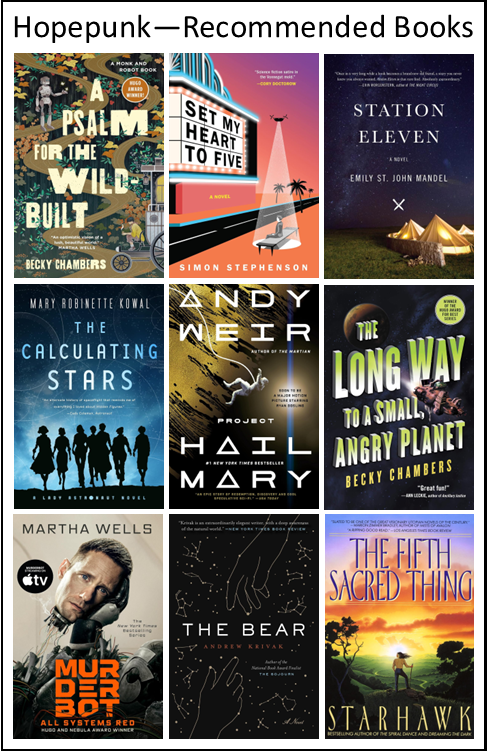


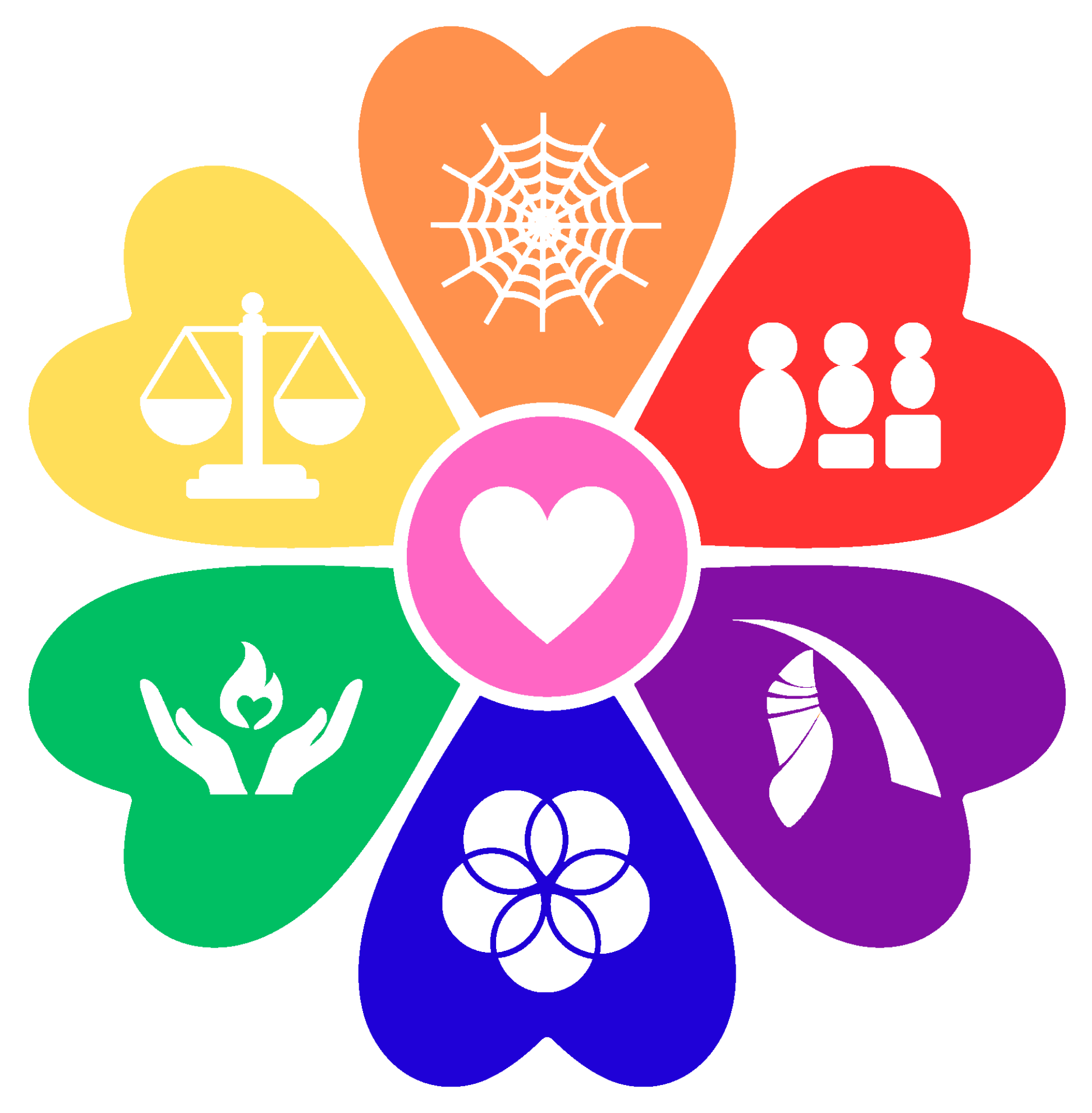
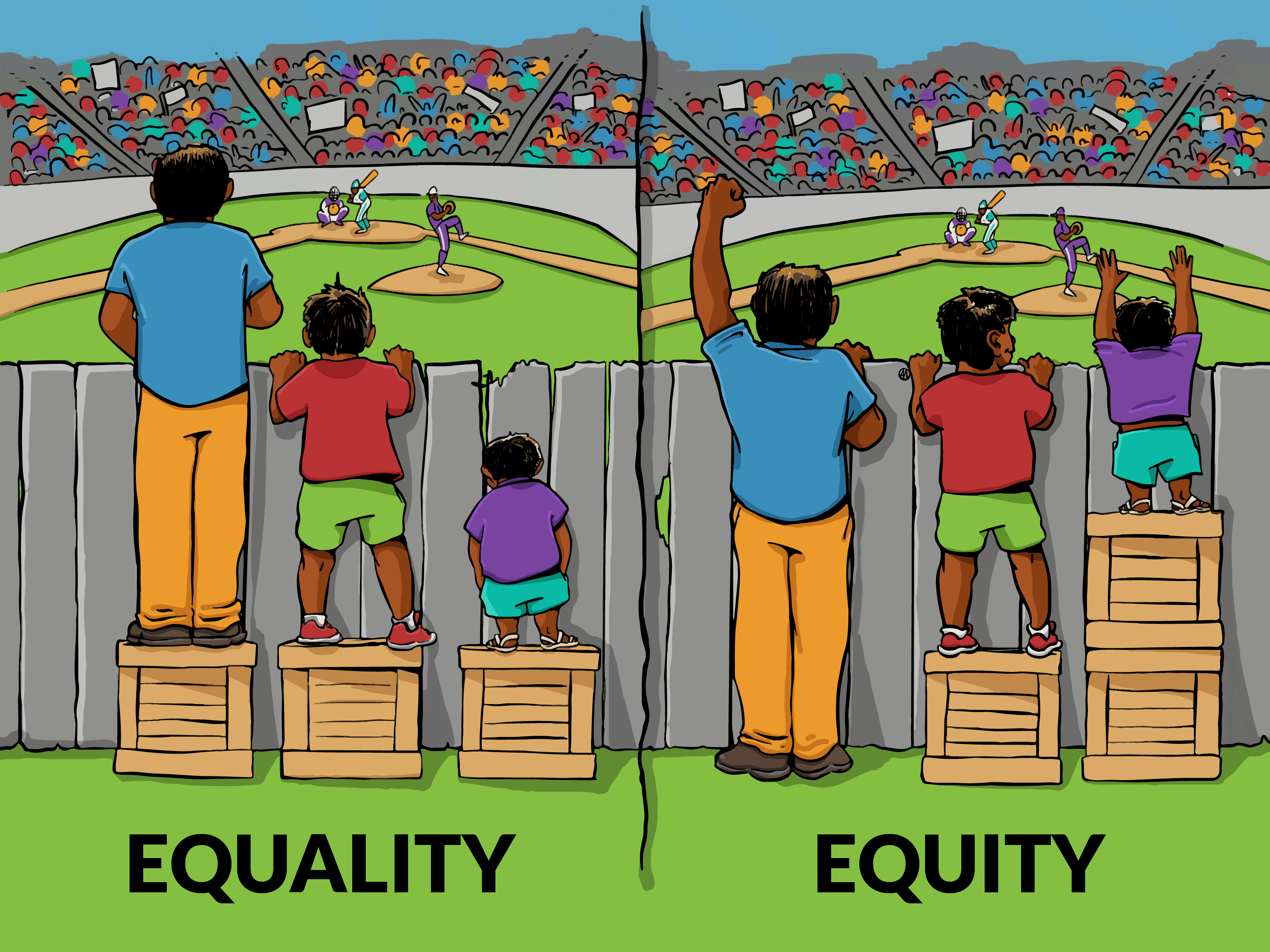


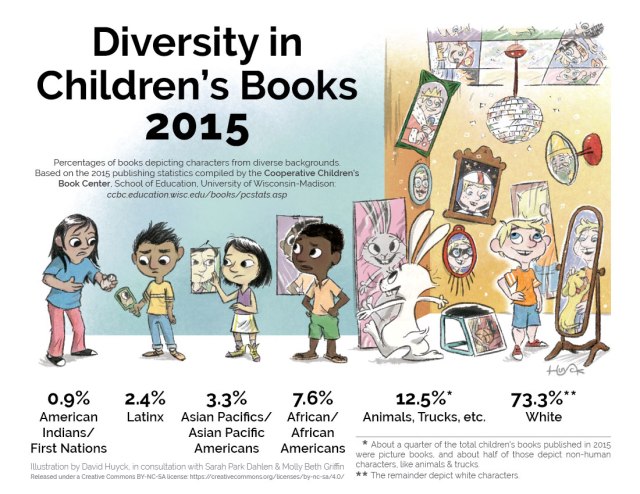

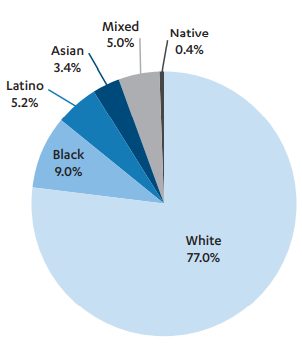
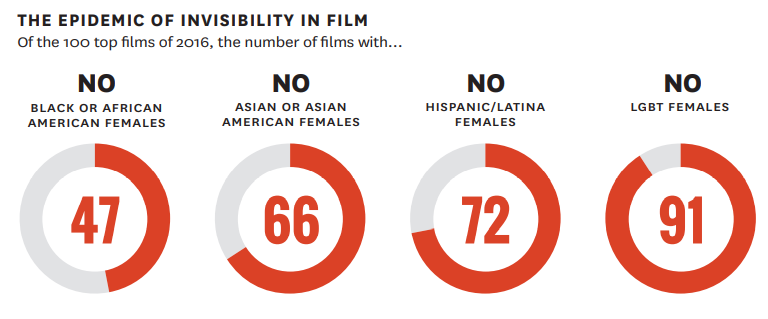


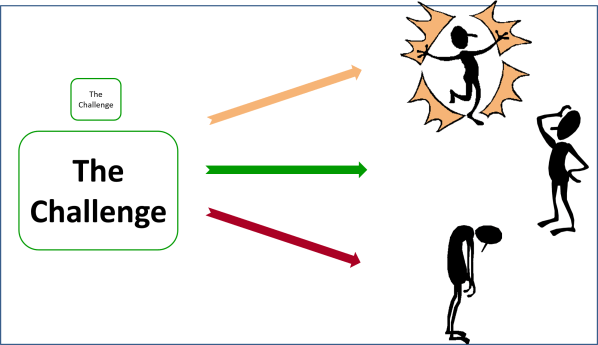

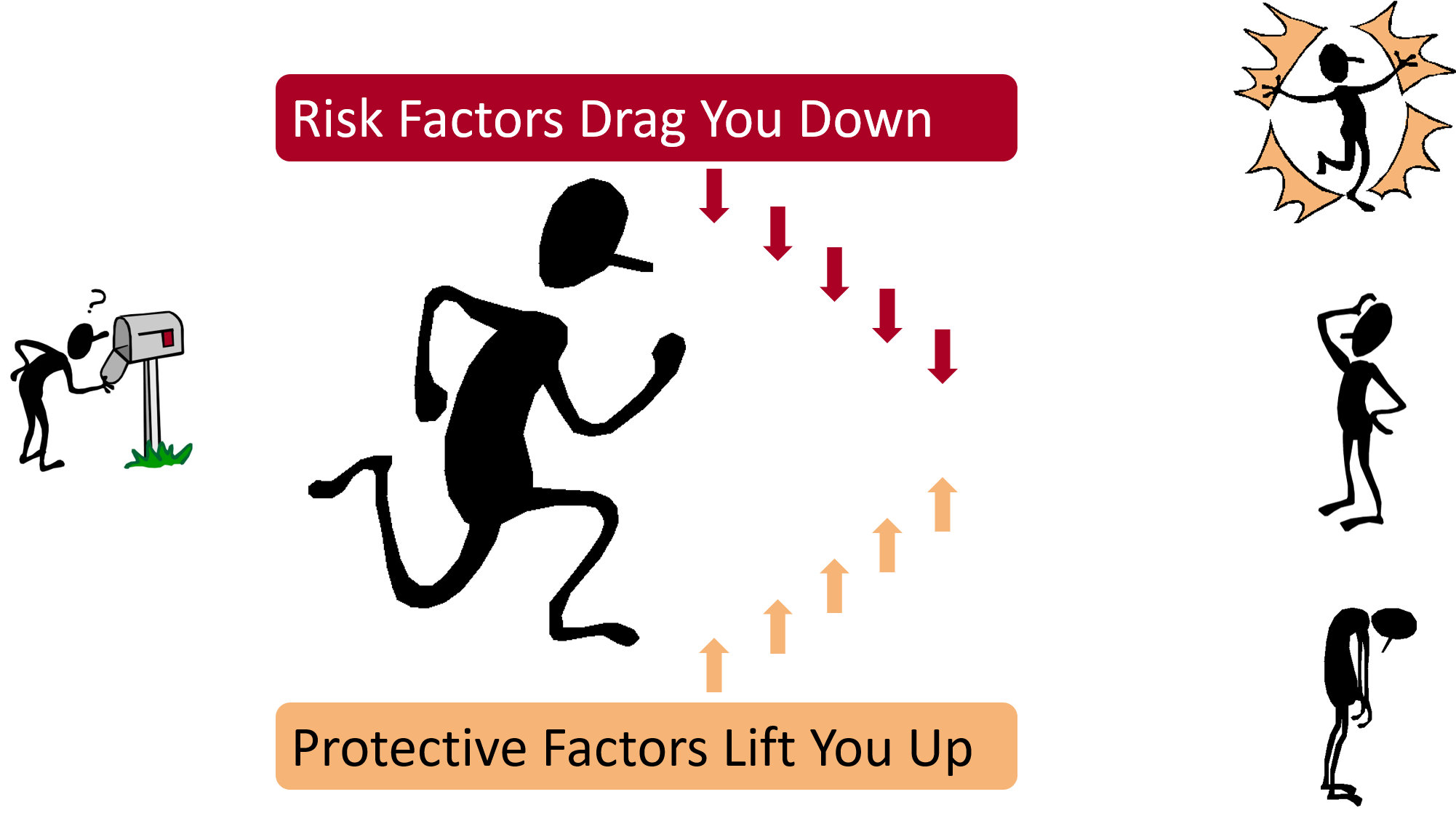
 What tips the balance for good outcomes is when the protective factors outweigh the risk factors. When we have so many good things going for us that the hard times are easy to overcome.
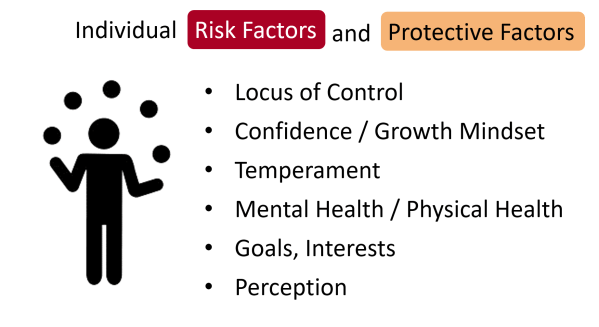 Developmental psychologist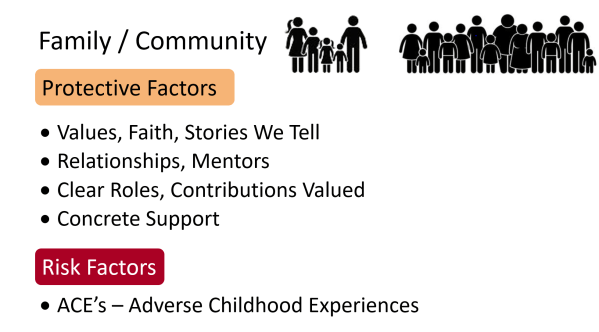
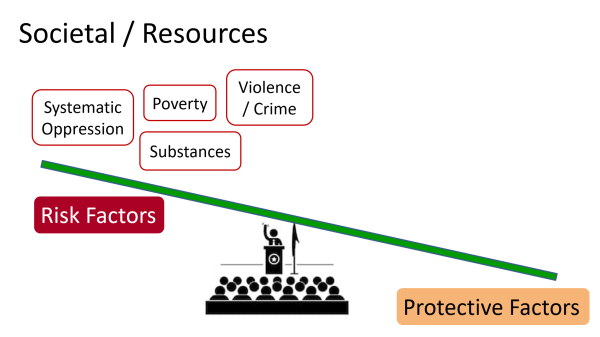
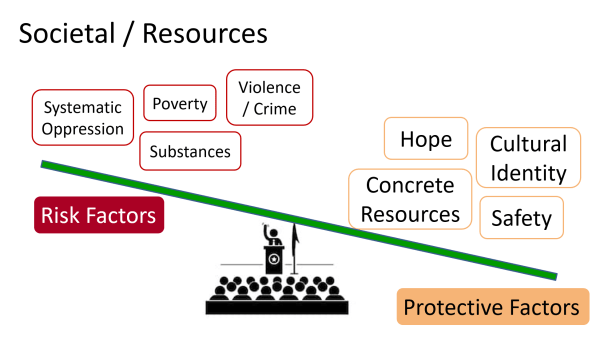 Work to dismantle systematic oppression. Respect and support cultural identities as tools for empowerment. Help increase equitable access to concrete resources and safe communities. Support organizations which work to increase hope in impoverished communities through the arts, access to job opportunities, and tools to help people reach for their dreams.
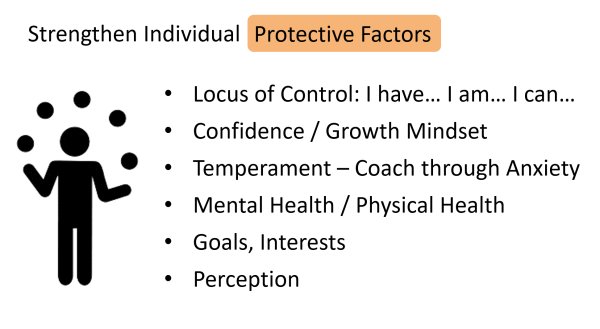
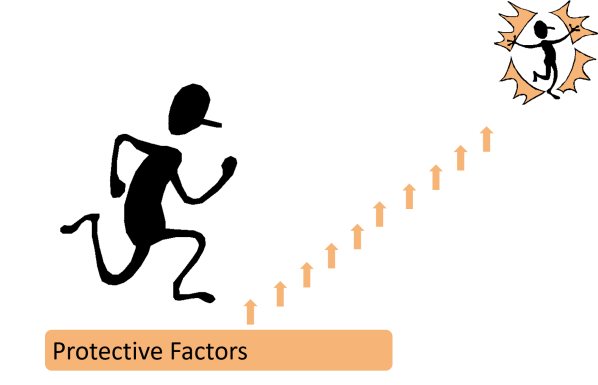 In the end, some of the most important protective factors that build resilience and increase positive outcomes are the stories that we tell ourselves about the challenges that we face, and the stories that we tell those in our community about who we are, and what we’re capable of. Earlier, our hymn said “Just as long as I have breath, I must answer, “Yes,” to life; though with pain I made my way, still with hope I meet each day.” It is that hope that can carry us forward.
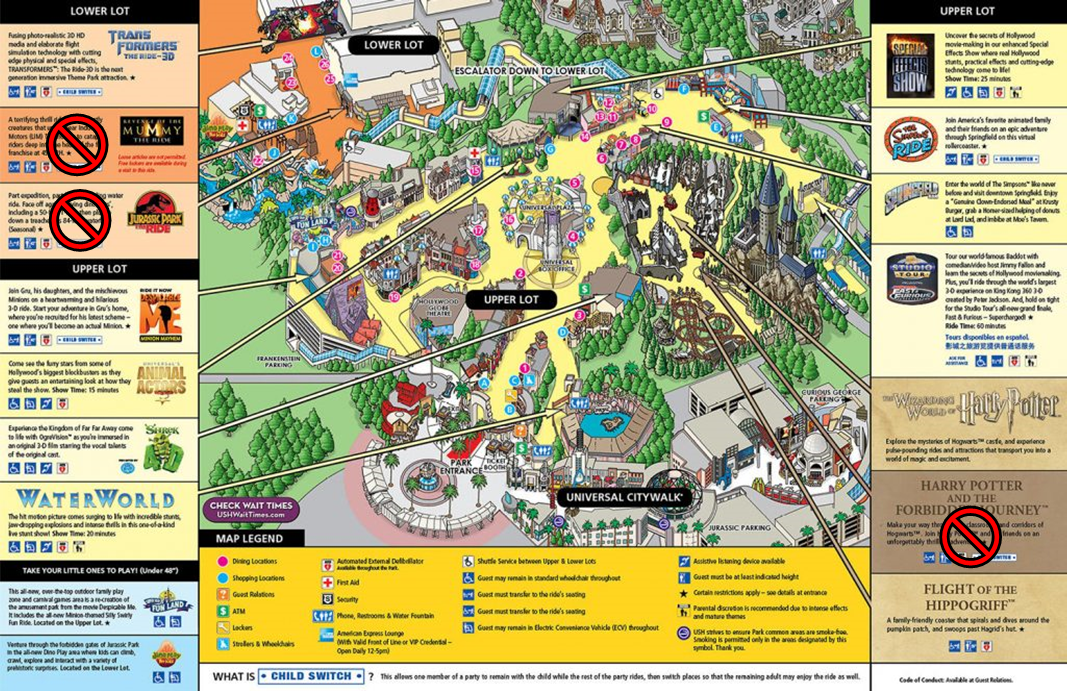
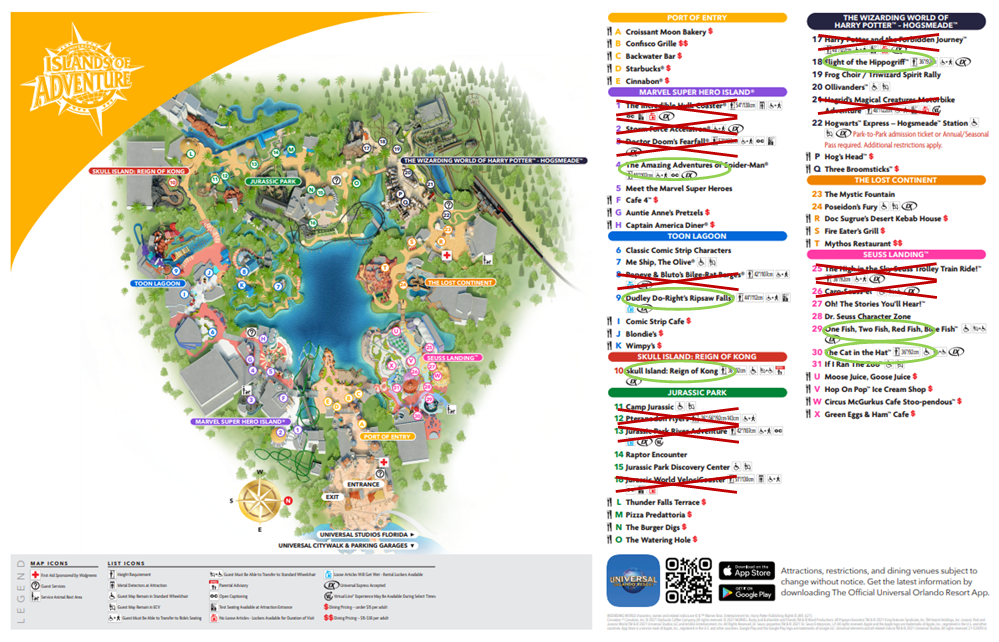

 Janelle Durham